
People searching for same day pre settlement loans are usually asking a speed question, not shopping for a bank product. The Milestone Foundation is a 501(c)(3) nonprofit litigation funding company, and it does not sell a same-day loan. The search phrase is a label people type. A same-day claim can mean a reply, a review, or a completed step, and those are not the same thing. Compare lawsuit loan alternatives before you plan around a fast headline, and ask which checkpoint the claim actually covers.
Call (716) 970-7100 to discuss your situation
What can a same day pre settlement loans search actually mean?
Advertisements often use “same day” for more than one milestone. A form confirmation is not a case review. A phone call is not an offer. An offer is not money in an account. Each step can move at its own pace, and a headline rarely says which one it means.
Pre-settlement funding is an advance tied to a pending legal claim. It is not legal advice, and sending an inquiry does not mean a case qualifies. The funder generally needs claim details and confirmation from the attorney on the case before it can assess a request. If that information is incomplete, the clock does not start just because an ad said it would.
On The Milestone Foundation’s funding application page, the stated averages are specific. Pre-settlement requests take one business week to review, on average. Post-settlement requests can be reviewed the same day. If either type is approved, funds can be provided within one to two business days. Those are process descriptions, not a promise for every case.
A careful reader treats “same day” as a question. Ask whether it refers to the first reply, the review, the decision, the signed agreement, or the sending of funds. Then ask what still has to happen before that point. For the longer sequence, the guide on how long pre-settlement funding takes covers the usual wait. This article stays on what a same-day claim is allowed to mean.
Which checkpoints come before any money moves?
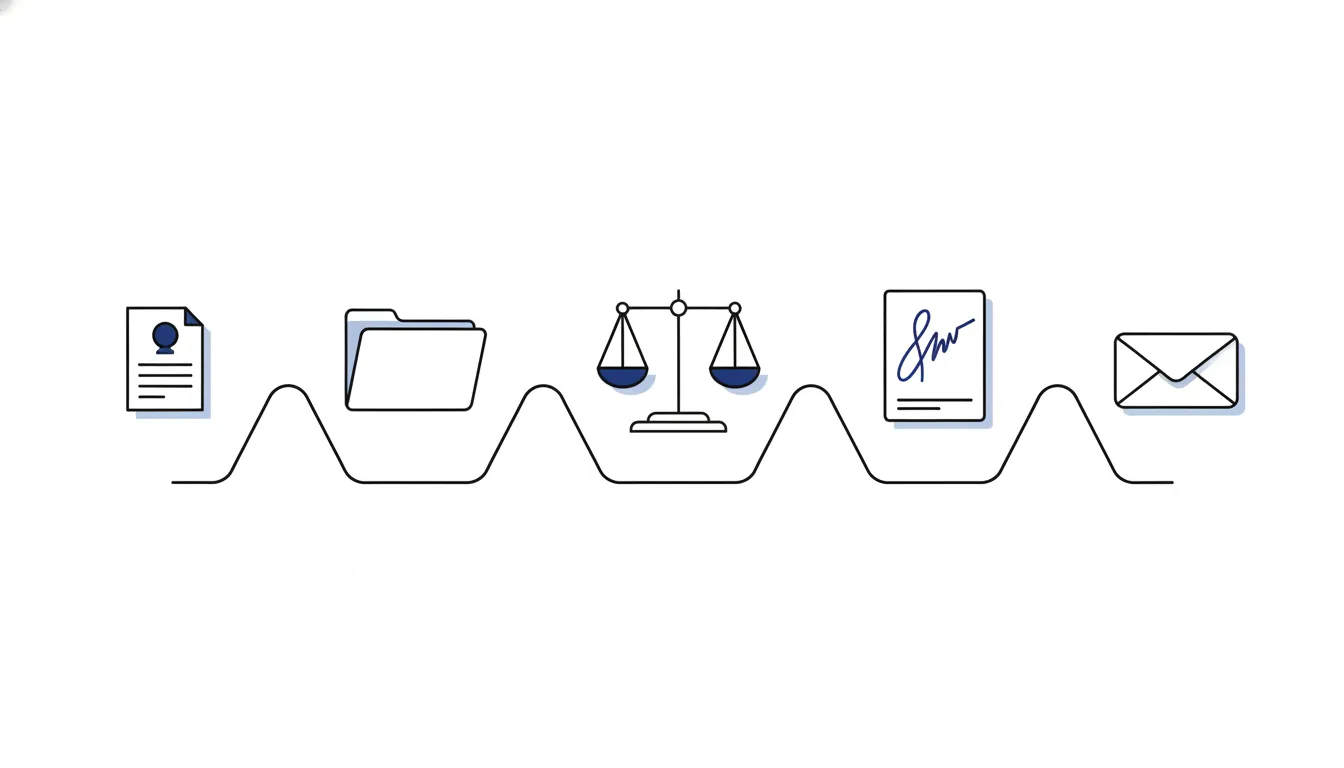
Think of an inquiry as a row of checkpoints, not a single promise about the clock. The first is the conversation or form. That can record why you are asking and the amount you have in mind. It does not finish a review.
Next, the provider may need information about the case and a response from your attorney. The Milestone Foundation works with the lawyer on the case, and an active attorney is part of the current application path. A law office that is in court or waiting on records can slow this step even when the funder is ready.
After that comes review. The provider looks at what it received and may ask follow-up questions. If it makes an offer, you still read the agreement, decide whether to accept it, and complete the paperwork. Any processing after signatures is another checkpoint. Ask which of those points a timing claim covers, and who will tell you if something pauses.

The U.S. Government Accountability Office describes consumer litigation financing as funding a person, often a plaintiff, uses for living expenses, with no repayment if the lawsuit is not successful. Its December 2022 report, Third-Party Litigation Financing, also notes that some states limit fees or rates and that there is no single national rule. That is background, not a description of your agreement. Your lawyer should read the contract that applies to you.
What should you verify before you rely on a fast claim?
Before you share sensitive details or plan around a payment date, ask the provider to name each step. Get the answers in writing when you can. The questions below separate an early estimate from an offer, and an offer from a finished process.
- What does “same day” refer to? Ask whether the timing is an initial reply, a review, a decision, a signed agreement, or receipt of funds.
- What information is still missing? Ask whether documents, attorney confirmation, or case updates are still required.
- Who will contact your attorney? Find out what the lawyer must confirm and whether you need to authorize that call.
- Is the amount final or only an estimate? A figure mentioned before review may not be an offer. Ask what could change it.
- How is the balance calculated? Ask whether interest is simple or compounded, what fees apply, and how time changes the total.
- What happens if the case does not succeed? Ask what the agreement says, and have your lawyer explain that language.
- Can you take time to read the agreement? Urgency is not a reason to sign terms you do not understand.
Keep a note of who you spoke with, the timing they described, and the conditions they gave. If an answer is vague, ask again for the specific checkpoint. Do not assume that a line in an advertisement applies to your case.
How do you compare a timing claim with the written terms?
Speed is only one point of comparison. A quick reply does not tell you the amount that may be due later, what triggers repayment, or whether the agreement fits your situation. Compare the written terms, not the headline.
| What you hear or see | What to verify | Why it matters |
|---|---|---|
| “Same-day decision” | Does that mean a first screen or a completed review? What case details and attorney confirmation are still required? | A preliminary reply is not a final offer. |
| “Funds sent quickly” | What must happen after approval, including agreement review, signatures, and processing? | Each remaining step can change when money arrives. |
| An advertised advance amount | Is that amount for your case, or only an example? What sets the final figure? | Eligibility and amounts are case-specific. An example is not a promise. |
| A stated rate or payoff | Ask for the full written calculation, including how time and any fees change the balance. | The total obligation matters more than a short headline. |
| “Nothing due if you lose” | Ask how the agreement defines the outcome and which exceptions apply. | Contract language controls. A verbal summary does not. |
Use the same questions with each provider. Ask for the agreement and a clear example of how the balance changes over time. If a term is unclear, pause and ask your attorney to explain it. The Milestone Foundation states its current pricing on its site: pre-settlement funding at 15% simple annual interest, post-settlement funding at 10% simple annual interest, no compounding, and a 2X repayment cap. The homepage also states that the organization has advanced more than $8 million to plaintiffs. Those are current site statements, not a quote for your case. The written offer controls.
What is different about a nonprofit funding company?
The search phrase uses the word “loans.” Many consumer funding agreements are not structured like a bank loan. Repayment is often tied to a recovery, and the contract may say nothing is due if the case does not succeed. That is a term to read, not a slogan to trust from an ad. The page on what a lawsuit loan means walks through that difference. This section only flags why the label matters when you are judging a speed claim.
The Milestone Foundation describes itself as the first and only nonprofit consumer litigation funding organization in the United States. It is a 501(c)(3) nonprofit company. It provides pre-settlement and post-settlement funding with simple interest that does not compound. Because it is a nonprofit company, “company” in a search does not change that status. It is not a for-profit lender, and it should not be described as one.
Pricing still has to be read in the agreement. Simple interest at a stated annual rate is not the same figure as a compounded rate, and a 2X cap is a ceiling to confirm in the document you sign. The fair pre-settlement funding page compares that approach with typical for-profit terms. It does not replace a review of your own offer. Whether an inquiry can be considered depends on the case and on attorney verification.
What can you prepare before you contact a provider?
Preparation can make the first conversation clearer. It cannot guarantee a faster decision, and it should not be treated as a way to skip review.
- Talk with your attorney. Explain why you are considering an advance. Ask what case information may matter and how an advance could affect settlement funds.
- Name the amount you need. List the immediate expenses, such as housing, food, or transportation. A specific figure is more useful than an advertised maximum.
- Gather basic case details. Be ready to describe the general status of the matter and, if you proceed, to share the attorney’s contact details through the application.
- Ask which step the timing covers. Request a short sequence of what happens after the inquiry, what depends on the lawyer, and when a request is considered complete.
- Read the agreement before you sign. Ask your attorney about the repayment math and about what the contract says if the case does not resolve as hoped.
You can review the requirements for a lawsuit advance before you decide which questions to raise. The funding frequently asked questions cover common process points. Neither page means a particular case will qualify, and neither sets a date for your funds.
How do you decide whether to move forward?
Separate urgency from fit. An immediate bill can make speed feel like the only issue. The agreement can still change what you keep from a future recovery. Ask your attorney to help you understand that effect, and take enough time to compare the written terms. If a provider cannot say what “same day” means, or will not put the terms in writing, do not treat the speed claim as a reason to proceed.
There may be other options to consider with your lawyer. Those can include talking with a creditor about timing, looking at household resources, or asking what else fits your situation. None of those is right for everyone. They are a reason not to sign in a rush. Your attorney advises on the legal matter. The funding provider explains its own process and its own agreement.
If you want to explore the process, you can contact the team or call (716) 970-7100. The office is at 50 Fountain Plaza, Suite 1300, Buffalo, NY 14202. An inquiry is a conversation. It is not a promise of eligibility, approval, or a funding date. Post-settlement review can be same-day on the current application page, and pre-settlement review averages one business week. Final legal or payment steps may still be underway even after a case has settled, so “awaiting payment” does not mean every legal task is finished.
Talk with us about your funding questions
Frequently asked questions
Can pre-settlement funding be completed in one day?
Not as a rule. The Milestone Foundation’s application page says pre-settlement review takes one business week on average. A same-day phrase in a search result does not mean every step, including funds being sent, will finish that day. Ask which checkpoint the claim covers.
Can a post-settlement request be reviewed the same day?
The current application page says post-settlement requests can be reviewed the same day. If a request is approved, funds can be provided within one to two business days. That is an average process note, not a guarantee for every file. Final legal or payment steps may still be underway while you wait for settlement money.
Does sending an application mean I will receive an advance?
No. An inquiry does not mean a case qualifies, that an offer will be made, or that a requested amount is available. A decision depends on review of the case and on confirmation from your attorney.
Is this the same thing as a loan?
The search phrase says “loans,” but that word is not the product. The Milestone Foundation provides non-recourse litigation funding as a 501(c)(3) nonprofit company. Read the agreement, and ask your attorney how repayment works if the case succeeds and if it does not.
What should you remember?
“Same day” is a timing claim to pin down, not a promise of approval or payment. Ask which checkpoint it describes. Confirm what your attorney still has to verify. Compare the written terms, including simple interest and any repayment cap, before you decide. A careful reading of lawsuit loan alternatives is a better start than treating a search headline as an offer.