
Post settlement funding rates can help you estimate what may be repaid after a settlement is reached but before the proceeds are available. The percentage alone is not the full cost: the interest method, the dates used, and the written agreement all matter. A careful comparison can help you understand the possible repayment amount before deciding whether to proceed.
Ask the Foundation about its post-settlement funding terms
What does a post-settlement funding rate tell you?
Post-settlement funding is an advance considered after a settlement has been reached but before proceeds are distributed to the plaintiff. There may still be paperwork, lien resolution, approvals, or other distribution steps. A rate describes how a charge is calculated over time; it does not, by itself, tell you the total that may be due on a particular date.
The Milestone Foundation is a 501(c)(3) nonprofit litigation funding company. It states that its post-settlement funding is offered at 10% simple annual interest, and that interest never compounds. Those are the Foundation’s stated terms in general, not an individual quote or a promise of approval, timing, or a particular amount. Read the written offer and agreement for the terms that apply to your situation.
The word “annual” identifies a year as the rate period. It does not mean that you can calculate an exact payoff without knowing the agreement’s start date and method for counting time. Ask what amount the rate applies to, what event starts the calculation, and how partial months or days are handled. Those details turn a headline percentage into a useful estimate.
For general background on federal tax-exempt organizations and 501(c)(3) terminology, the Internal Revenue Service website is an authoritative government starting point. An organization’s nonprofit status does not replace the need to review the rate, calculation, and other terms in a particular written offer.
How does simple interest affect the amount you may repay?
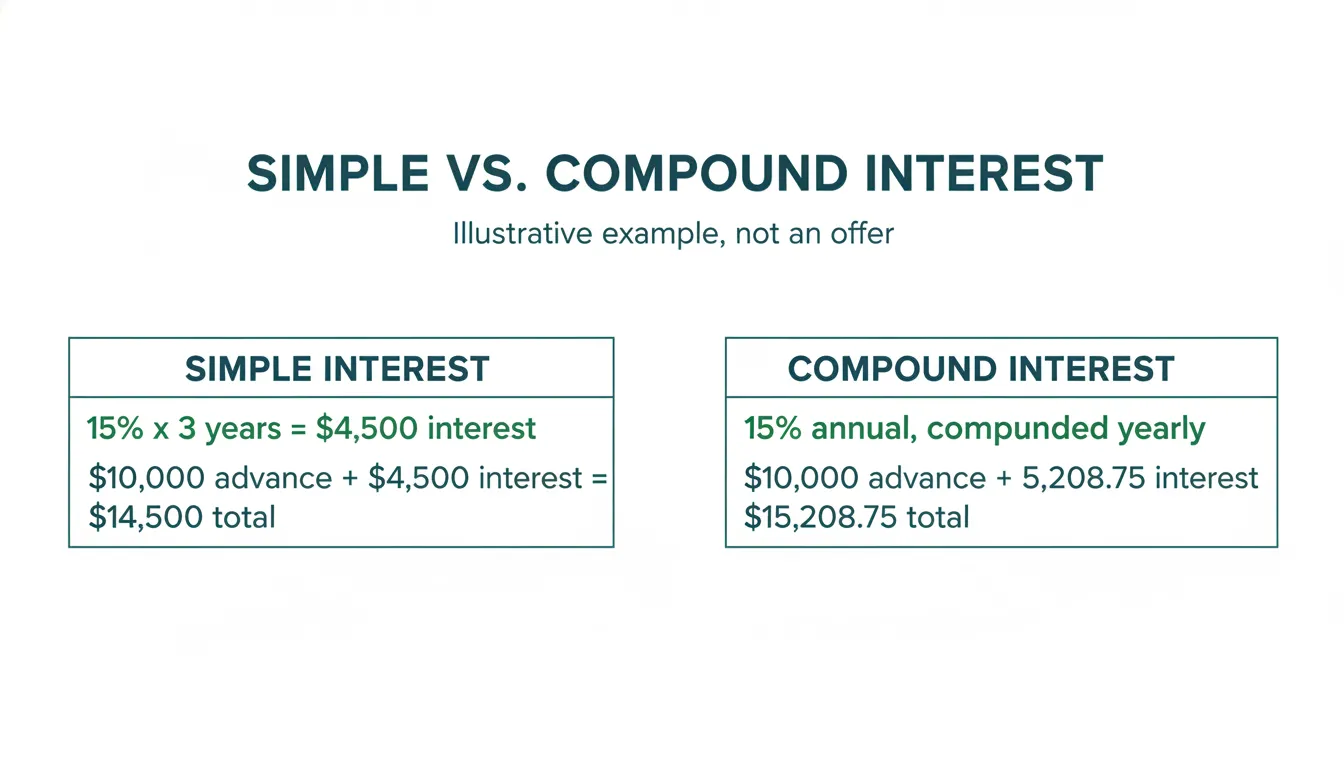
Simple interest is calculated on the original amount advanced. Interest that has already accrued is not added to the base for calculating later interest. In a basic illustration, multiply the original advance by the annual rate and the portion of a year covered.
For example, with an illustrative $5,000 advance at 10% simple annual interest, a full year of interest would be $500 if the agreement used a straight-line annual calculation on that basis. A straight-line six-month illustration would be $250. That produces illustrative totals of $5,500 after a year or $5,250 after six months, before any other terms. These figures show the arithmetic only. They are not an offer, payoff quote, or prediction for a particular case.
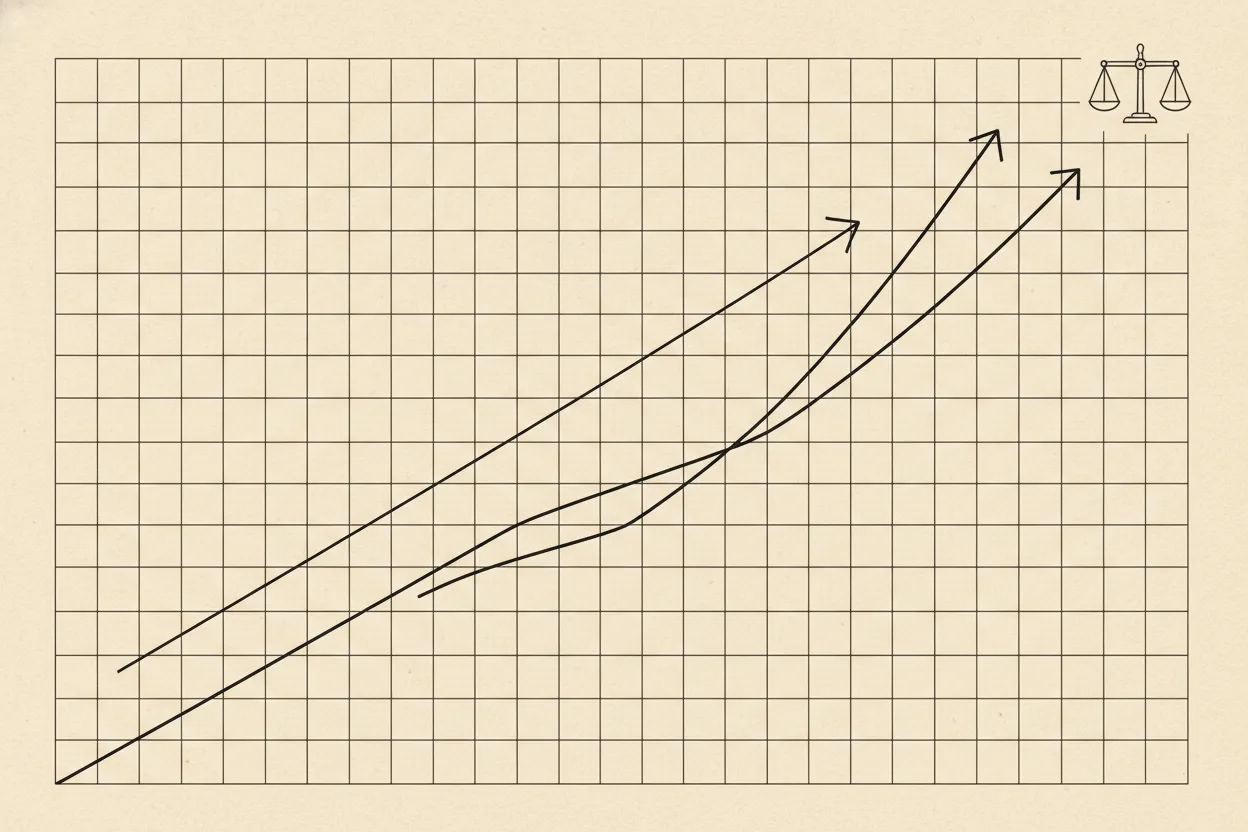
Under a compounding method, accrued interest may be added to a balance and then included in the base for a later interest calculation. With simple interest, the base remains the original advance instead. That difference matters as time passes. Simple interest can still accrue over time, so it does not mean the amount stays unchanged; it means the calculation does not apply interest to prior interest.
Actual contract calculations can differ from a simple illustration. An agreement may specify the start date, the day-count method, whether partial periods are prorated, and the point through which interest is calculated. Ask for a written payoff estimate for a specific date rather than assuming an example gives the amount due on your expected distribution date.

What should you compare besides the percentage?
Compare the amount you would actually receive with the estimated total due on the same proposed payoff dates. A comparison can mislead if one estimate assumes a shorter period, a different advance amount, or a different fee treatment. Ask each provider to state the assumptions behind its figures.
| Item | Details |
|---|---|
| Rate and method | Illustrative example: 10% simple annual interest in an illustration What to confirm in writing: Whether the rate is annual, simple, and noncompounding |
| Original advance | Illustrative example: $5,000 What to confirm in writing: What amount is used as the interest base |
| Time period | Illustrative example: Six months or twelve months What to confirm in writing: Start date and the rule for partial periods |
| Illustrative interest | Illustrative example: $250 at six months; $500 at one year What to confirm in writing: Whether the agreement uses a different date calculation |
| Total repayment estimate | Illustrative example: $5,250 or $5,500 before other terms What to confirm in writing: Separate charges, payoff date, and repayment procedure |
This table simplifies the math; it is not a substitute for a payoff statement. For a useful comparison, request an estimate for the date you currently expect proceeds and another for a later date that is still plausible. Ask the provider to identify each separate charge instead of presenting an unexplained total. If a charge is deducted from the amount delivered, record both the approved advance and the amount you would receive.
Review the Foundation’s funding information and answers to common funding questions for general context. Use the written terms for your own offer when comparing actual amounts and timing.
How can you read an offer line by line?
Start with the amount. Find the amount approved, then check the amount that would be delivered to you. If the two figures differ, ask whether an amount is withheld or whether a separate charge applies. Do not assume that the larger figure is what you will receive or that a difference has already been included in the repayment total.
Next, locate the rate and the interest method. Check whether the rate is described as annual, monthly, or another period. Look for plain wording about simple interest and whether it compounds. If the document uses a percentage but does not explain how it is applied, request a written explanation and example rather than guessing what the language means.
Then find the start date. It may depend on an event described in the agreement, so do not assume that it begins on the day you first ask about funding or the date the settlement was reached. Ask how the agreement treats partial months, days, weekends, and an earlier or later payoff. Request totals for dates that fit the current distribution estimate and a possible delay.
Finally, read the sections about repayment, fees, changes, and timing. Ask what happens if distribution is delayed or the expected amount changes. Ask who coordinates repayment from settlement proceeds and what information may be needed from counsel. The written agreement controls; an explanation can help you understand it but should not replace the terms. Keep the offer, agreement, and payoff estimates together so you can refer to the same figures when speaking with your attorney.
Which questions belong on a comparison checklist?
Use the same questions for each offer, and write down the answers. This makes it easier to spot missing information and compare estimates without relying on memory.
- What period does the rate cover? Is the percentage annual, monthly, or stated for another period?
- How is interest calculated? Does the agreement say simple interest, and does it state whether interest compounds?
- What date starts the calculation? Which event triggers accrual, and how will you verify that date?
- How are partial periods counted? Ask how days, partial months, or partial years affect the estimate.
- What would be due on likely dates? Request written totals for at least two possible payoff dates.
- Are there other charges? Ask whether every charge appears in the estimate and what each one covers.
- How much would you receive? Compare the delivered amount with any approved or stated advance amount.
- How does repayment happen? Ask who coordinates payment and what role, if any, counsel has in the process.
- What could change the estimate? Ask how a delay or a changed distribution date affects the payoff.
- What case steps remain? Ask your attorney about paperwork, liens, approvals, and the expected distribution process.
A simple worksheet can keep the review organized. Use one row per offer and columns for amount received, rate and method, start date, estimated total on each date, separate charges, and conditions. Write “not provided” when a term is missing. That is more useful than filling a gap with an assumption. If a figure changes, note when you received it and ask what changed in the calculation.
The Foundation describes its post-settlement interest as simple and noncompounding. Its funding requirements information provides additional general context, but you should confirm the terms of a particular offer in its written documents. Keep a copy of the estimate and the date it was prepared.
How can you compare offers using the same assumptions?
Imagine you are looking at two written offers for the same $5,000 advance. One gives a percentage but no payoff example. The other gives a total but does not say which date or calculation it used. Those documents do not yet support a like-for-like comparison. Ask both providers for the calculation method and estimates using the same advance amount and the same two possible payoff dates.
For a 10% simple annual interest illustration, the basic interest on $5,000 is $250 over a straight-line half-year and $500 over a full year. Use those numbers only to understand the arithmetic. Do not assume another offer uses that rate or method, or that a particular agreement uses the same day-count convention. The provider should be able to show how its written estimate was calculated.
For a practical worksheet, write the shared assumptions at the top before entering any figures: the amount being advanced, the date interest begins, and the two comparison dates. For instance, if both estimates use a $5,000 original advance and a six-month and twelve-month illustration, record the stated payoff figure for each date separately. Do not replace a missing number with the simple-interest example above. Mark it as unavailable, then ask the provider for a written figure and the calculation behind it.
Next, separate the amount you receive from the amount you may repay. Suppose an offer shows a $5,000 advance but a smaller delivered amount after a listed charge. Note both numbers and ask whether that charge is deducted up front, added later, or handled another way. Then compare the same categories for the other offer. This prevents a lower-looking total from obscuring that less money may be delivered. If the estimates use different dates or definitions, ask for corrected estimates before comparing them.
Compare the money you would receive with the full estimated repayment amount on each date. Check whether a charge is deducted from what you receive or added to repayment. Ask for an explanation if the offers treat a charge differently. If one estimate covers a different time period, request a replacement using the same date assumptions before drawing a conclusion.
Nonprofit status is useful context when considering the Foundation, but it does not eliminate the need to read the particular agreement. The Foundation identifies itself as a 501(c)(3) nonprofit organization and states that its post-settlement interest is 10% simple annual interest, never compounding. Its page on nonprofit litigation funding offers more background. Focus on terms you can verify in writing rather than assuming a label alone explains the full cost.
What if the distribution date moves?
A payoff estimate depends on its assumptions, including the date used. If paperwork or another distribution step takes longer than expected, ask for an updated amount based on the new date. Compare it with the earlier estimate and request an explanation of the difference. With simple interest, the calculation is based on the original advance rather than prior interest, but the amount may still increase as more time passes.
Do not treat a six-month illustration as a cap if proceeds could take longer to arrive. Ask for one estimate based on the date currently expected and another using a later date you consider plausible. Ask how the agreement handles repayment if timing changes again. The purpose is not to predict exactly when distribution will happen. It is to understand how a changed timeline could affect the amount under the written terms.
Keep each estimate with its preparation date and the assumptions used. If two figures differ, check whether the original amount, start date, period, or charges changed. This short record helps you ask focused questions and reduces the chance that an older estimate will be mistaken for a current payoff figure.
What should you discuss with your attorney?
Your attorney can explain what remains before settlement proceeds are distributed and what may affect timing or the amount available to you. Ask whether there are unresolved liens, final documents, approvals, or other distribution steps. Counsel can also help you understand how the repayment process relates to your case and what coordination a provider may request.
Share the written offer, agreement, and payoff estimates instead of summarizing them from memory. Point to the exact clause or calculation that raises a question. You might ask: “Which date should I use to compare these estimates?” “What remaining steps could affect distribution?” and “Who coordinates repayment?” These questions connect the financial terms to the status of your case.
Funding is a financial decision, not legal advice. Do not treat an expected settlement or estimated distribution date as a guarantee that funds will arrive by a particular day. Timing and applicable terms depend on the case and the agreement. The Foundation’s information for attorneys may be useful for counsel reviewing general funding information.
What is a practical next step?
Before deciding, gather the written offer and ask for payoff totals on at least two plausible dates. Confirm the amount you would receive, the rate basis, whether interest compounds, the start date, any separate charges, and how repayment is coordinated. Put the answers in a comparison worksheet, and ask your attorney about case-specific timing and distribution steps. The Foundation’s about page gives further information about the organization and its nonprofit status.
Contact the Foundation with questions about its terms
A clear written comparison can help you understand the possible repayment obligation before deciding whether post-settlement funding fits your circumstances.