Blog

November 17, 2026

Searching for “Same Day Pre Settlement Loans”? What to Check

People searching for same day pre settlement loans are usually asking a speed question, not shopping for a bank product. The Milestone Foundation is a 501(c)(3) nonprofit litigation funding company, and it does not sell a same-day loan. The search phrase is a label people type. A same-day claim can mean a reply, a review, or a completed step, and those are not the same thing. Compare lawsuit loan alternatives before you plan around a fast headline, and ask which checkpoint the claim actually covers.

Call (716) 970-7100 to discuss your situation

What can a same day pre settlement loans search actually mean?

Advertisements often use “same day” for more than one milestone. A form confirmation is not a case review. A phone call is not an offer. An offer is not money in an account. Each step can move at its own pace, and a headline rarely says which one it means.

Pre-settlement funding is an advance tied to a pending legal claim. It is not legal advice, and sending an inquiry does not mean a case qualifies. The funder generally needs claim details and confirmation from the attorney on the case before it can assess a request. If that information is incomplete, the clock does not start just because an ad said it would.

On The Milestone Foundation’s funding application page, the stated averages are specific. Pre-settlement requests take one business week to review, on average. Post-settlement requests can be reviewed the same day. If either type is approved, funds can be provided within one to two business days. Those are process descriptions, not a promise for every case.

A careful reader treats “same day” as a question. Ask whether it refers to the first reply, the review, the decision, the signed agreement, or the sending of funds. Then ask what still has to happen before that point. For the longer sequence, the guide on how long pre-settlement funding takes covers the usual wait. This article stays on what a same-day claim is allowed to mean.

Which checkpoints come before any money moves?

Think of an inquiry as a row of checkpoints, not a single promise about the clock. The first is the conversation or form. That can record why you are asking and the amount you have in mind. It does not finish a review.

Next, the provider may need information about the case and a response from your attorney. The Milestone Foundation works with the lawyer on the case, and an active attorney is part of the current application path. A law office that is in court or waiting on records can slow this step even when the funder is ready.

After that comes review. The provider looks at what it received and may ask follow-up questions. If it makes an offer, you still read the agreement, decide whether to accept it, and complete the paperwork. Any processing after signatures is another checkpoint. Ask which of those points a timing claim covers, and who will tell you if something pauses.

Five closed doors in a courthouse hall, each a separate checkpoint before funding can move forward
Each checkpoint is separate. A fast first step does not finish the ones after it.

The U.S. Government Accountability Office describes consumer litigation financing as funding a person, often a plaintiff, uses for living expenses, with no repayment if the lawsuit is not successful. Its December 2022 report, Third-Party Litigation Financing, also notes that some states limit fees or rates and that there is no single national rule. That is background, not a description of your agreement. Your lawyer should read the contract that applies to you.

What should you verify before you rely on a fast claim?

Before you share sensitive details or plan around a payment date, ask the provider to name each step. Get the answers in writing when you can. The questions below separate an early estimate from an offer, and an offer from a finished process.

  • What does “same day” refer to? Ask whether the timing is an initial reply, a review, a decision, a signed agreement, or receipt of funds.
  • What information is still missing? Ask whether documents, attorney confirmation, or case updates are still required.
  • Who will contact your attorney? Find out what the lawyer must confirm and whether you need to authorize that call.
  • Is the amount final or only an estimate? A figure mentioned before review may not be an offer. Ask what could change it.
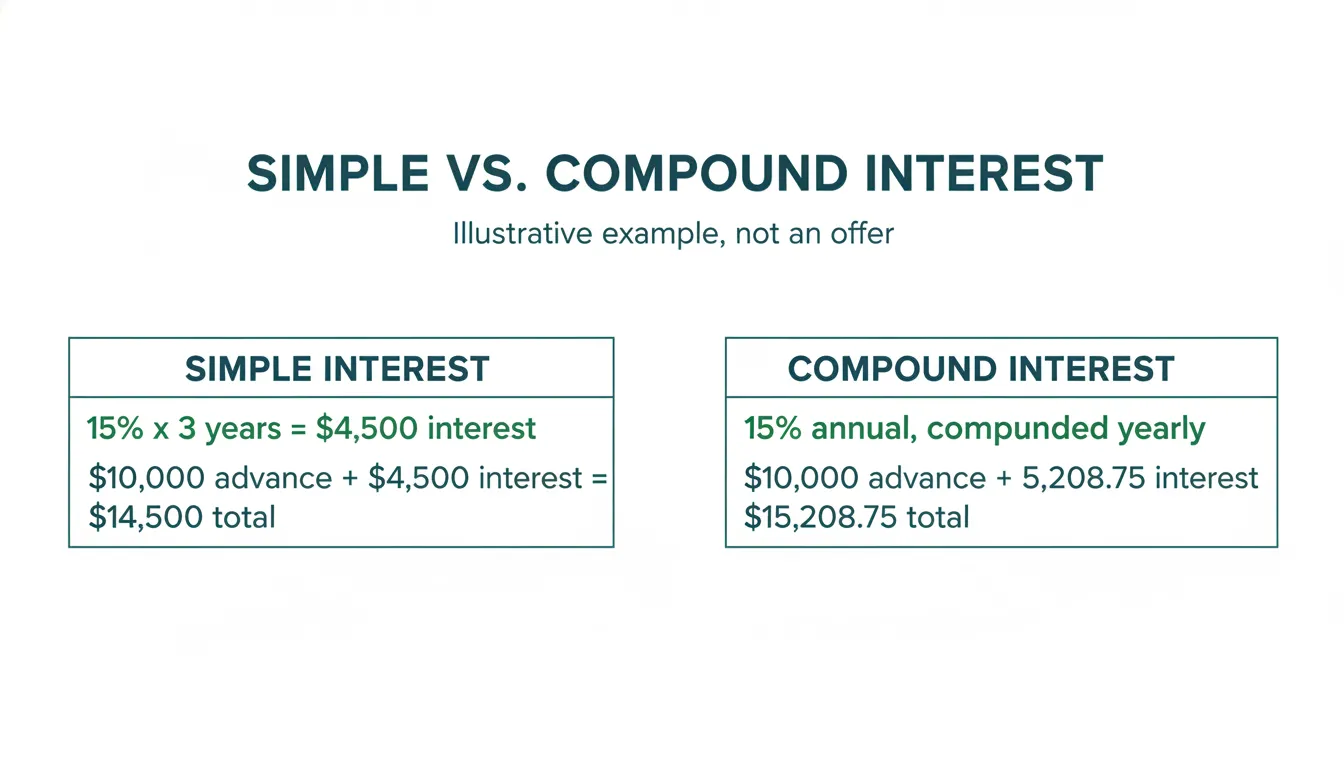
  • How is the balance calculated? Ask whether interest is simple or compounded, what fees apply, and how time changes the total.
  • What happens if the case does not succeed? Ask what the agreement says, and have your lawyer explain that language.
  • Can you take time to read the agreement? Urgency is not a reason to sign terms you do not understand.

Keep a note of who you spoke with, the timing they described, and the conditions they gave. If an answer is vague, ask again for the specific checkpoint. Do not assume that a line in an advertisement applies to your case.

How do you compare a timing claim with the written terms?

Speed is only one point of comparison. A quick reply does not tell you the amount that may be due later, what triggers repayment, or whether the agreement fits your situation. Compare the written terms, not the headline.

What you hear or seeWhat to verifyWhy it matters
“Same-day decision”Does that mean a first screen or a completed review? What case details and attorney confirmation are still required?A preliminary reply is not a final offer.
“Funds sent quickly”What must happen after approval, including agreement review, signatures, and processing?Each remaining step can change when money arrives.
An advertised advance amountIs that amount for your case, or only an example? What sets the final figure?Eligibility and amounts are case-specific. An example is not a promise.
A stated rate or payoffAsk for the full written calculation, including how time and any fees change the balance.The total obligation matters more than a short headline.
“Nothing due if you lose”Ask how the agreement defines the outcome and which exceptions apply.Contract language controls. A verbal summary does not.

Use the same questions with each provider. Ask for the agreement and a clear example of how the balance changes over time. If a term is unclear, pause and ask your attorney to explain it. The Milestone Foundation states its current pricing on its site: pre-settlement funding at 15% simple annual interest, post-settlement funding at 10% simple annual interest, no compounding, and a 2X repayment cap. The homepage also states that the organization has advanced more than $8 million to plaintiffs. Those are current site statements, not a quote for your case. The written offer controls.

What is different about a nonprofit funding company?

The search phrase uses the word “loans.” Many consumer funding agreements are not structured like a bank loan. Repayment is often tied to a recovery, and the contract may say nothing is due if the case does not succeed. That is a term to read, not a slogan to trust from an ad. The page on what a lawsuit loan means walks through that difference. This section only flags why the label matters when you are judging a speed claim.

The Milestone Foundation describes itself as the first and only nonprofit consumer litigation funding organization in the United States. It is a 501(c)(3) nonprofit company. It provides pre-settlement and post-settlement funding with simple interest that does not compound. Because it is a nonprofit company, “company” in a search does not change that status. It is not a for-profit lender, and it should not be described as one.

Pricing still has to be read in the agreement. Simple interest at a stated annual rate is not the same figure as a compounded rate, and a 2X cap is a ceiling to confirm in the document you sign. The fair pre-settlement funding page compares that approach with typical for-profit terms. It does not replace a review of your own offer. Whether an inquiry can be considered depends on the case and on attorney verification.

What can you prepare before you contact a provider?

Preparation can make the first conversation clearer. It cannot guarantee a faster decision, and it should not be treated as a way to skip review.

  1. Talk with your attorney. Explain why you are considering an advance. Ask what case information may matter and how an advance could affect settlement funds.
  2. Name the amount you need. List the immediate expenses, such as housing, food, or transportation. A specific figure is more useful than an advertised maximum.
  3. Gather basic case details. Be ready to describe the general status of the matter and, if you proceed, to share the attorney’s contact details through the application.
  4. Ask which step the timing covers. Request a short sequence of what happens after the inquiry, what depends on the lawyer, and when a request is considered complete.
  5. Read the agreement before you sign. Ask your attorney about the repayment math and about what the contract says if the case does not resolve as hoped.

You can review the requirements for a lawsuit advance before you decide which questions to raise. The funding frequently asked questions cover common process points. Neither page means a particular case will qualify, and neither sets a date for your funds.

How do you decide whether to move forward?

Separate urgency from fit. An immediate bill can make speed feel like the only issue. The agreement can still change what you keep from a future recovery. Ask your attorney to help you understand that effect, and take enough time to compare the written terms. If a provider cannot say what “same day” means, or will not put the terms in writing, do not treat the speed claim as a reason to proceed.

There may be other options to consider with your lawyer. Those can include talking with a creditor about timing, looking at household resources, or asking what else fits your situation. None of those is right for everyone. They are a reason not to sign in a rush. Your attorney advises on the legal matter. The funding provider explains its own process and its own agreement.

If you want to explore the process, you can contact the team or call (716) 970-7100. The office is at 50 Fountain Plaza, Suite 1300, Buffalo, NY 14202. An inquiry is a conversation. It is not a promise of eligibility, approval, or a funding date. Post-settlement review can be same-day on the current application page, and pre-settlement review averages one business week. Final legal or payment steps may still be underway even after a case has settled, so “awaiting payment” does not mean every legal task is finished.

Talk with us about your funding questions

Frequently asked questions

Can pre-settlement funding be completed in one day?

Not as a rule. The Milestone Foundation’s application page says pre-settlement review takes one business week on average. A same-day phrase in a search result does not mean every step, including funds being sent, will finish that day. Ask which checkpoint the claim covers.

Can a post-settlement request be reviewed the same day?

The current application page says post-settlement requests can be reviewed the same day. If a request is approved, funds can be provided within one to two business days. That is an average process note, not a guarantee for every file. Final legal or payment steps may still be underway while you wait for settlement money.

Does sending an application mean I will receive an advance?

No. An inquiry does not mean a case qualifies, that an offer will be made, or that a requested amount is available. A decision depends on review of the case and on confirmation from your attorney.

Is this the same thing as a loan?

The search phrase says “loans,” but that word is not the product. The Milestone Foundation provides non-recourse litigation funding as a 501(c)(3) nonprofit company. Read the agreement, and ask your attorney how repayment works if the case succeeds and if it does not.

What should you remember?

“Same day” is a timing claim to pin down, not a promise of approval or payment. Ask which checkpoint it describes. Confirm what your attorney still has to verify. Compare the written terms, including simple interest and any repayment cap, before you decide. A careful reading of lawsuit loan alternatives is a better start than treating a search headline as an offer.


Back to All Posts
November 16, 2026

Is Litigation Funding Legal? Key Rules for Plaintiffs

Is litigation funding legal? In many situations, a third party may provide a case-related advance to a person with a pending civil claim, but the answer for a specific offer depends on the applicable law and the agreement. State rules, court requirements, and the structure of the arrangement can matter. If you are considering an offer, ask your attorney to review it before you sign.

Ask a question about funding

What does litigation funding mean?

Litigation funding describes arrangements where a third party provides money connected to a legal claim. In a consumer arrangement, a plaintiff may receive an advance while a civil case is pending and agree that repayment will be made from a future recovery, subject to the written terms. Some agreements are described as non-recourse, meaning repayment generally depends on a recovery. The exact agreement controls, so do not assume that every provider or product uses the same structure.

The U.S. Government Accountability Office (GAO) discusses third-party litigation financing and notes that plaintiffs generally do not have to repay funding if their lawsuit is unsuccessful. Its report also separates consumer and commercial financing, showing why the phrase can cover different arrangements. Read the GAO report on third-party litigation financing for broader context; it is not a substitute for advice about a particular contract or jurisdiction.

Funding is not a ruling on the strength of a case. It does not decide who will win, what a claim is worth, or whether a settlement should be accepted. A funder is not your lawyer. Keep legal advice and funding decisions distinct, and ask counsel to explain any effect an agreement could have on your case.

Is litigation funding legal in every state?

There is no one simple answer that applies to every jurisdiction and every funding arrangement. Applicable state statutes, court rules, case-specific orders, and contract terms can affect how an agreement is evaluated. The details can also differ between an individual seeking an advance and a business or law firm arranging commercial financing. A general article cannot determine which requirements apply to your case.

Do not rely on a provider’s broad statement that funding is always legal, or on a general online claim that it is always prohibited. Identify where the lawsuit is pending and ask your attorney whether the law of that place, any relevant court order, or a requirement in your case affects the proposed arrangement. If you live in a different state from where the case is filed, ask whether that difference matters rather than assuming it does or does not.

That jurisdiction check is useful even when an arrangement appears straightforward. A contract may include provisions about notices, disclosure, confidentiality, repayment, or communication with counsel. The presence or absence of a provision in the agreement does not itself answer whether it is legally required. Counsel can verify the applicable rule and explain what must be done in your case.

What is the difference between consumer and commercial funding?

The phrase litigation funding can refer to more than one kind of arrangement. Consumer funding typically refers to an advance to an individual involved in a civil case. Commercial funding may involve financing for a business, law firm, or a portfolio of claims. Their purposes, parties, and contract structures can differ, so a statement about one category should not automatically be applied to another.

The GAO report describes third-party litigation financing in more than one category. It is useful background, but not a state-by-state guide for a consumer reviewing an offer. When reading an article or talking with a provider, check whether it is discussing an individual plaintiff’s advance or a commercial arrangement. Then bring the specific proposed contract to the attorney who knows your case.

For plaintiffs, the practical questions are concrete: What amount would be provided? What would trigger repayment? How would the amount owed be calculated over time? What happens if the case ends without a recovery? For counsel, additional questions may concern client communication, case information, professional obligations, and any applicable disclosure rules. The answers should come from the actual agreement and qualified legal advice, not from an assumption based on a label.

How can you compare funding with other ways to cover expenses?

Before deciding whether to consider a case-related advance, list the immediate expense and the options that may address it. Funding is only one possible route. Depending on your circumstances, alternatives could include a payment plan with a service provider, help from family, available insurance benefits, or other resources. Each option has different conditions and consequences; this comparison is a prompt for discussion, not a recommendation that one choice is right for everyone.

Option to exploreWhat to clarifyQuestions to ask
Case-related advanceWhether repayment depends on recovery and how the contract calculates the amount owedWhat is the total under different timelines and case outcomes? Can my attorney review the terms?
Payment arrangementDue dates, fees, consequences of missed payments, and whether the arrangement is writtenCan the provider set a schedule that fits my current resources?
Insurance or benefitCoverage, eligibility, limits, timing, and any effect on other rightsWho can confirm what is available and what paperwork is required?
Personal or community supportWhether assistance is available, its conditions, and how it affects relationships or obligationsCan we agree clearly on whether the help is a gift or must be repaid?

For a funding offer, compare the same things across providers: the amount delivered to you, every fee or charge, the calculation method, any maximum repayment, and what happens if the case takes longer than expected. If one offer describes a charge as simple and another uses a different method, ask for a written example showing the balance at several time points. Do not compare only the amount you receive at the outset.

An illustrative worksheet can help. Write down the advance amount; any amount withheld at the start; the date the agreement begins; the charge calculation; any fees; and the repayment trigger. Ask the provider to show an example after six months, one year, and a longer period that is realistic for your case. These are comparison dates, not a prediction of when your case will end. Then have your attorney review whether the example follows the agreement.

To make a fair comparison, use the same hypothetical timeline for every written offer. For example, ask each provider to explain what the agreement would require if a case resolved relatively soon, took longer, or ended without a recovery. Do not supply a made-up recovery value as if it were expected; instead, ask which contract language governs each outcome. This lets you see whether an offer’s cost depends on time, recovery, or another factor without treating a projection as a promise.

Keep the comparison focused on dollars and obligations, not just labels. A short summary might show: net amount received; charges deducted at the start; how any additional amount is calculated; possible repayment at the dates illustrated; and the section of the contract supporting each figure. If the provider cannot explain a number clearly, mark it as unresolved rather than guessing. Ask for a revised written example before deciding.

Also consider whether the requested amount addresses the need without creating an unnecessarily large obligation. Write down the expense, its due date, and the amount needed. Then compare that need with the funds offered and the agreement’s repayment terms. Your attorney can help assess the legal implications, but your budget and personal circumstances also matter. No general article can determine what amount, if any, makes sense for an individual reader.

What should you review before signing?

Read the complete contract and request a copy you can take time to review. A short verbal summary may leave out details that matter later. Use a checklist, mark unclear language, and ask for explanations in writing. The Foundation’s funding FAQs can help you organize questions, but your attorney should explain how the agreement applies to your case.

  • Amount provided: What will you actually receive after any deductions? Are the amount and timing stated clearly?
  • Repayment trigger: What case outcome makes repayment due? What does the agreement say if there is no recovery?
  • Cost calculation: Is the amount owed calculated using simple or compounding charges, or another method? When does the calculation begin?
  • Fees and deductions: Are there application, processing, servicing, or other charges? Are they included in examples?
  • Maximum amount: Is repayment capped? If so, what conditions and calculations determine that limit?
  • Case duration: How could the balance change if the case lasts longer than expected?
  • Attorney involvement: Does the agreement preserve your and your attorney’s control over legal decisions? Who communicates about the case?
  • Information and privacy: What case documents or personal information are requested, who can receive them, and what notices may be needed?
  • Ending or changing the agreement: Can it be canceled or amended, and what would happen if you decide not to proceed?

A simple review sequence can make the conversation easier. First, gather the full agreement, any fee schedule, and all written examples. Second, circle language you do not understand and note whether it concerns cost, repayment, information, or case decisions. Third, ask the provider for a written answer to each question and confirm that any explanation matches the contract version you received. Fourth, send the same materials to your attorney and ask what rules or case-specific concerns apply. Finally, take time to decide; a verbal explanation is not a replacement for clear written terms.

Before signing, check that the final copy includes any changes discussed and that you have a complete copy for your records. If an explanation conflicts with the agreement, do not try to resolve the mismatch by guessing which one controls. Ask the provider to clarify it in writing and ask counsel whether the revised language addresses the issue. This step-by-step approach can reveal unanswered questions before they become important later.

Do not sign under pressure or treat a projected case value as money certain to be recovered. A settlement or judgment may be different from expectations, and timing can change. Ask your attorney to explain how the proposed repayment may interact with attorney fees, case expenses, liens, or the distribution of any recovery. An estimate is not a promise about the case outcome.

A plaintiff and attorney reviewing a funding agreement at a desk

If you are not sure how a term works, ask the provider to identify the exact contract section and explain it in plain language. Then ask your attorney to independently confirm the meaning. Keep a copy of the signed agreement and any written explanation. This gives you and counsel a shared reference if questions arise later.

What questions should you bring to your attorney?

Start with your own need and the timing. Explain what expense you are trying to cover, when it is due, and whether other options are available. You do not need to decide in advance that an advance is the answer. Your attorney can help you understand how the proposed terms fit alongside case planning and the possible distribution of a recovery.

Questions to take to counsel include:

  • Does a statute, court rule, order, or case-specific requirement apply to this agreement?
  • Would any disclosure or notice be required, and who would handle it?
  • Does the agreement affect my control of the case or any settlement decision?
  • How could repayment be handled alongside fees, expenses, liens, or other obligations?
  • What happens if there is no recovery, a partial recovery, or a delayed resolution?
  • Can you review the full written contract before I sign?

Attorneys considering a funding arrangement can consult the Foundation’s resources for attorneys and its attorney resource materials. These resources are general information; they do not replace independent analysis of the applicable law, professional duties, or a client’s circumstances. For an individual, the attorney handling the case remains the best person to explain case-specific implications.

How does The Milestone Foundation describe its approach?

The Milestone Foundation is a 501(c)(3) nonprofit litigation funding organization. Its nonprofit status distinguishes its organizational structure; it does not eliminate the need to review any agreement or confirm what rules apply. The Foundation offers pre-settlement and post-settlement advances, with individual eligibility and terms subject to review. Read about the nonprofit litigation funding model and the organization’s background and nonprofit status for additional context.

If you want to understand what information may be needed, review the funding inquiry process. An inquiry is not a guarantee of approval or funding, and learning about the process does not commit you to accepting an offer. Take any proposed written agreement to your attorney before making a decision.

What should you remember?

Litigation funding may be available in many circumstances, but legality and contract consequences depend on the arrangement and applicable jurisdiction. Confirm the rules with counsel, compare the full cost and repayment terms, and make sure you understand what happens under different outcomes and timelines. The Milestone Foundation is a 501(c)(3) nonprofit, and its home page explains its approach to funding.

Learn more about the nonprofit funding model

When you have a specific offer, share the complete written agreement with your attorney and ask for advice based on your case and the law that applies to it.

Back to All Posts
November 16, 2026

What Is Litigation Funding for Plaintiffs?

What is litigation funding for plaintiffs? It is money a funder advances to a person in a civil case so they can cover essential living costs while the case moves forward. The advance is tied to the case, not to a credit card or a bank loan. If the case does not produce a recovery, the plaintiff owes nothing.

If you already have a lawyer and an active case, start with plaintiff funding options and pick the form that matches your stage.

The Milestone Foundation is a 501(c)(3) nonprofit company and the only nonprofit consumer litigation funding organization in the United States. We provide pre-settlement funding at 15% simple annual interest and post-settlement funding at 10% simple annual interest. Interest never compounds, and we do not run a credit check. A licensed attorney must confirm the case before any advance is approved.

That is the short answer. The rest of this guide explains who the money is for, how repayment works, and why the attorney check matters before anyone compares providers.

A long case can outlast a household budget. Rent, groceries, and a car payment do not pause because a claim is pending. Funding exists so that gap does not become the reason someone accepts a low offer. It is a bridge for essentials, not a second lawsuit and not a substitute for advice from your own lawyer.

What Is Litigation Funding for Plaintiffs?

Litigation funding for a plaintiff is a cash advance based on a pending or settled civil claim. The person uses it for rent, food, utilities, transportation, or other basics while they wait. It is not money for the law firm to pay its own case costs, and it is not capital for a business dispute.

The U.S. Government Accountability Office describes consumer litigation funding as a smaller advance, often under $10,000, that an individual uses for living expenses. Commercial funding, by contrast, often involves millions of dollars for a company or a law firm. Plaintiffs searching the phrase usually need the first kind of help, not the second. Our guide to litigation finance and litigation funding separates those labels for attorneys.

A plaintiff still owns the decision about settlement. A fair funder does not take over the lawsuit, choose the lawyer, or pressure someone to accept or reject an offer. The attorney stays in charge of the legal work. The funder reviews the claim with that attorney and, if the advance is approved, is repaid only from a successful recovery.

People sometimes call this a lawsuit loan. The everyday label is common, but the structure is different from borrowing against a paycheck or a house. Our page on what a lawsuit loan is covers that wording. This guide stays with the plaintiff definition.

The about page states the mission in practical terms. We help people cover housing, food, transportation, and utilities when an injury has made work impossible. The point is that hardship should not be what decides the case. Founded in 2016 by John and Amy Bair, and earlier known as the Bairs Foundation, we are based at 50 Fountain Plaza in Buffalo, New York.

Plaintiffs come to this with very different claims. The application lists auto accidents, personal injury, medical malpractice, product liability, railroad injuries, sex abuse, traumatic brain injury, and wrongful death, among others. The shared fact is an active civil matter and a lawyer, not a single case type. If the claim is still only a question and no attorney has taken it, this product is not the right first step.

What Is Litigation Funding for Plaintiffs? How Does It Work?

Non-recourse means repayment comes only from the case. If the case is lost, or a settlement is never paid, the plaintiff does not repay the advance from wages, savings, or other property. There is no monthly bill and no credit pull. The homepage of The Milestone Foundation states this directly: if you lose, you owe nothing, and applying does not affect your credit.

A bank loan or a credit card works the other way. Those debts stay due even if the lawsuit fails, and many cards use compounding interest plus fees. The homepage comparison uses a $1,000 example over three months. At 15% simple annual interest with a 2X cap, the nonprofit example is $1,037.50. The same illustration shows a credit-card example at $1,049.25 and a traditional funder example, at 5% monthly compounding plus fees, at $1,157.63.

Simple interest is calculated only on the original advance. It does not charge interest on interest. On the live site, pre-settlement funding is 15% simple annual interest and post-settlement funding is 10% simple annual interest. The 2X cap shown on the homepage means total repayment on that example does not grow past twice the advance. A full cost comparison belongs on the pre-settlement funding cost guide, not here.

Because the risk sits with the funder when a case fails, the review looks at the claim. Clear liability, damages, and a defendant who can pay matter more than a credit score or a job history. That is also why a plaintiff should ask only for the amount needed for essential bills. A smaller advance costs less to repay if the case resolves.

It helps to separate three kinds of cash people mix together. A personal loan is repaid on a schedule no matter what the court does. A credit card can require a minimum payment every month. A non-recourse advance waits on the case. If you are comparing those choices, ask what happens in the month the case is still open and in the month it ends with no recovery. Only the third option drops away in that second month.

The homepage also shows why the interest method matters more than a slogan. Compounding means last month’s interest becomes part of the balance. Simple interest stays on the original advance. Our pre-settlement rate is 15% a year on that original amount, and the post-settlement rate is 10%. We do not add a separate origination fee on top of those rates. Terms still vary by case, so the written offer is the number that counts.

Pre-Settlement and Post-Settlement Funding Are Not the Same Step

The timing of the case changes the product. Pre-settlement funding is an advance while the lawsuit is still open. Post-settlement funding is an advance after a settlement agreement exists, while the plaintiff waits for the money to arrive. Final releases, liens, and payment steps can still be underway during that wait. Funding at that stage does not mean every legal task is finished.

The apply page states both rates in one place. Pre-settlement funding is 15% simple interest and never compounds. Post-settlement funding is 10% simple interest. Pre-settlement review takes about one business week on average. Post-settlement requests can be reviewed the same day. If a request is approved, funds can be sent within one to two business days.

QuestionPre-settlement fundingPost-settlement funding
When it is used.While the lawsuit is still pending.After a settlement is agreed, while payment is pending.
Simple annual interest.15%, never compounding.10%, never compounding.
Typical review.About one business week.Can be the same day.
If there is no recovery.The plaintiff owes nothing.The plaintiff owes nothing if settlement funds are not paid.

Both types are meant for essentials such as housing, food, and transportation. Neither one replaces legal advice. A deeper look at the open-case product is on the pre-settlement funding page. The wait after an agreement is covered on the post-settlement funding page.

Choosing the wrong form slows the review. If the case is still being litigated, use the pre-settlement application. If you have already signed a settlement agreement and the check has not arrived, use the post-settlement application. The second form is not a claim that the legal work is finished. Liens, releases, and trust-account steps can still be open while you wait to be paid.

The lower post-settlement rate reflects a narrower risk. A settlement amount has been agreed, so the remaining question is payment timing, not whether liability will be proved. Pre-settlement funding still depends on how the open case turns out. That is why the rates are not the same, and why we ask which stage you are in before we quote a cost.

Why Attorney Verification Comes Before an Advance

Attorney verification is the check that the person has a real case and a licensed lawyer. The Milestone Foundation coordinates directly with that lawyer to confirm case details. We do not approve consumer litigation funding for someone who is not represented. The attorney acknowledges the funding and stays responsible for legal strategy.

That step protects the plaintiff and the case. Counsel can see the rate, the non-recourse term, and the amount requested before the client signs. Counsel can also say if a smaller amount would cover the immediate bill. The funder does not direct settlement talks. Repayment, if the case resolves, is coordinated from the recovery with the law firm.

The apply form asks for the attorney’s name, law firm, email, and phone, plus the type of case and the state where the case is pending. Case types on the form include auto accidents, personal injury, medical malpractice, product liability, and other civil claims. State of residence is collected, but it is not the qualification gate. The case and the attorney relationship are.

A person walks from a home toward a courthouse, showing the wait between daily life and a civil case
An advance is meant to cover essentials while a represented plaintiff waits on a case.

If your lawyer has not worked with us before, we explain the nonprofit model and confirm the facts with the firm. Attorneys who want the referral path can start from the for attorneys page. Plaintiffs who want the qualification detail can read the requirements for a lawsuit advance.

You can expect a short sequence, not a bank underwriting file. You send the application. We contact the law firm. The firm confirms that the case is active and that the request fits the likely recovery. If we approve it, funds can go out within one to two business days after that approval. If we cannot confirm the attorney or the case, we do not fund it.

Bring your lawyer the amount you actually need for the next stretch of bills, not a round number picked at random. Also bring the question of what repayment would look like if the case resolves in six months and if it resolves in two years. Simple interest makes that conversation concrete. Counsel can compare it with doing nothing, with help from family, or with a credit card that still has to be paid if the case fails.

What to Review Before You Compare Plaintiff Funding Options

A plain definition is useful only if the next offer can be read the same way. Before comparing plaintiff funding options, write down five facts from any proposal. Those facts matter more than a brand name or a monthly teaser rate.

  1. Who receives the money, and is it limited to essential living costs?
  2. Is repayment non-recourse if the case produces no recovery?
  3. Is the charge simple interest or compounding interest, and is there any fee beyond that rate?
  4. Will a licensed attorney review the amount and confirm the case?
  5. Does the funder claim any right to control settlement decisions?

Rules are not the same in every state. The GAO reported in 2022 that federal law does not specifically regulate this industry, while some states limit fees or interest. In New York, where our office is in Buffalo, Senate Bill S1104A was introduced in the 2025-2026 session as a Consumer Litigation Funding Act. A bill is not a statute. Plaintiffs should rely on the written offer and on their own lawyer, not on a headline about a proposal.

Our nonprofit status is the reason the rates stay at 15% and 10% simple interest. We do not pay investor returns, and the live site states that there is no credit check. A longer comparison of nonprofit and for-profit models is on the nonprofit litigation funding page. Use that page for the model. Use this page for the definition.

Since 2016, The Milestone Foundation, previously the Bairs Foundation, has advanced more than eight million dollars to plaintiffs. The about page describes that work as support for basic living costs so financial hardship does not force an unfair settlement. The same page reports support for more than 1,200 plaintiffs with more than 350 law firms. The homepage separately notes trust from more than 1,200 attorneys. We cite both figures because the live pages use them for different counts. Funding is still limited to qualified plaintiffs with active matters and licensed counsel. Terms vary by case.

A good comparison stops when the five facts above are on paper. You do not need a tour of every state statute to decide whether one offer is readable. If a provider will not say whether interest compounds, whether any fee sits outside the rate, or what happens with no recovery, you do not yet have an offer you can compare. Ask your attorney to read that page with you before you sign.

Questions are welcome before you apply. Call 716-970-7100 or use the contact form.

Frequently Asked Questions

What is litigation funding for plaintiffs in plain terms?

It is a cash advance for a person in a civil case, used for essential living costs while they wait. Repayment comes from a successful recovery. If there is no recovery, the person owes nothing.

Is plaintiff litigation funding a bank loan?

No. A bank loan or credit card stays due even if the lawsuit fails, and it can involve a credit check and compounding charges. This advance is non-recourse and is reviewed with the attorney on the case.

Do I have to repay if I lose?

No. The Milestone Foundation states that funding is non-recourse. You owe nothing if the case does not resolve, and post-settlement funding is not repaid if the settlement funds are not paid.

Why does my attorney have to be involved?

We confirm the case with your licensed attorney before an advance is approved. That check keeps the legal strategy with your lawyer and makes the rate, the amount, and the non-recourse term visible to counsel.

How do I ask about plaintiff funding options?

Start with the application if you have a lawyer and an active case, or call the Buffalo office. Pre-settlement and post-settlement forms are separate because the timing and the rate are different.

Talk With Us Before You Apply

If you have a licensed attorney and need help with essential bills, review plaintiff funding options. Pick the pre-settlement or post-settlement form that matches your case. You can also call 716-970-7100 or use the contact form. We will coordinate with your lawyer. Funding is available only when the case qualifies.

Back to All Posts
November 12, 2026

How Does Pre-Settlement Funding Affect My Attorney Fees?

If you are considering an advance while your case is ongoing, it is reasonable to ask: how does pre-settlement funding affect my attorney fees?
Funding does not rewrite your fee agreement by itself, but the repayment terms may affect the amount of settlement proceeds left after case costs, legal fees and the advance are accounted for. The key is to understand each item separately and ask your attorney to review the written terms before you decide.

Ask about your funding options

How are attorney fees different from funding repayment?

Attorney fees are the charges described in your agreement with your lawyer. In many personal injury matters, a fee agreement explains how the lawyer is paid and how fees are calculated if there is a recovery. The exact arrangement depends on your agreement and applicable rules. Case expenses are a separate category. They may include costs advanced or paid during the case, as described in your agreement and case records.

A pre-settlement advance is a separate funding arrangement. If you accept one, the contract explains what is owed and how repayment is handled. The funding company does not become your lawyer, and the advance is not the same thing as your lawyer’s fee. Still, all of these amounts can be relevant when you and your attorney review what may remain from a settlement.

For that reason, do not compare only the amount you might receive today. Ask how repayment is calculated over time, whether other charges apply, and how the provider’s terms fit alongside your fee agreement and case expenses. The funding FAQs can help you learn general terms, while your attorney can explain how your own documents work.

Where can funding fit into a settlement breakdown?

A useful way to think about the relationship is to keep the separate obligations visible. A settlement statement may show the recovery and the deductions or obligations that apply to your situation. It is not safe to assume a particular order, percentage or final amount without reviewing the documents and asking your attorney.

Attorney fees

What it generally represents: Payment to your lawyer under your written fee agreement

What to review: How the fee is calculated and what event triggers payment

Case expenses

What it generally represents: Costs paid or advanced in connection with the case

What to review: Which expenses are included, how they are documented, and how they are handled

Funding repayment

What it generally represents: The amount due under a separate funding agreement

What to review: How the balance grows, when repayment is due, and what happens if there is no recovery

Remaining proceeds

What it generally represents: What may be left after applicable obligations are resolved

What to review: Ask your attorney to explain the actual figures and sequence for your case

This is a discussion framework, not a universal calculation formula. Case agreements, state rules and the terms of any funding contract matter. Ask your attorney to walk through a hypothetical using the actual documents, and make clear which numbers are estimates and which are final. If you have already received funding, request an up-to-date payoff figure in writing rather than relying on an old estimate.

It can help to ask for a simple side-by-side worksheet. One column can show the current estimate without a new advance, and another can show the estimate with the proposed advance and its projected repayment. The comparison should use the same assumptions about timing, fees and case expenses in both columns. If the estimates use different assumptions, the difference may reflect those assumptions rather than the funding itself.

For instance, a discussion might look at what changes if the case resolves sooner than expected or remains open longer. The point is not to predict a settlement date or outcome. It is to see how time affects the stated balance under the agreement and to understand what the estimate leaves out. Ask whether the projected amounts are examples only, and who can provide an updated calculation if circumstances change.

Also distinguish gross recovery from money available to you. A gross figure does not by itself show fees, expenses, or a funding balance. Your attorney can explain how a draft settlement statement handles the separate items in your case. If any line is unclear, ask for a written explanation before treating the estimate as a decision-making number.

Can funding change the fee agreement with my attorney?

Taking an advance does not, by itself, change the words in your attorney-client fee agreement. But it can add a repayment obligation tied to a future recovery. That may affect your overall financial picture, which is why your attorney should know about the proposed funding before you sign and should have a chance to review its terms.

Ask whether the funding agreement requires the attorney to confirm case information, provide documents, or follow a particular process if the matter resolves. The answer should come from the actual agreement, not a verbal summary. Your attorney can also tell you whether anything in the proposed terms raises a concern for your case or needs clarification.

The Milestone Foundation describes itself as a 501(c)(3) nonprofit funding organization. If you compare providers, treat legal status as one point to verify, not a substitute for reviewing the contract. The Foundation’s page on nonprofit funding explains its approach, and its attorney information is available for counsel who want to learn about the process.

How do case expenses fit into the picture?

Case expenses can be confused with attorney fees because both may appear in discussions about a settlement. They are not necessarily the same item. Depending on your agreement and case, expenses may be paid or advanced during the case and then handled according to the agreement. Ask your attorney to distinguish fees from costs on any settlement estimate.

Funding repayment is another separate line to understand. A clear comparison should identify:

  • What amount you would receive now, if approved under the provider’s review.
  • The balance due under the funding agreement at different possible repayment dates.
  • Any charges beyond the funding amount, if the contract provides for them.
  • How documented case expenses and attorney fees are shown in the estimate.
  • What the agreement says if the case does not result in a recovery.

Do not treat an informal estimate as a promise of your final proceeds. A case can take more or less time than expected, and the amount owed may depend on the contract’s calculation method and timing. Ask for the assumptions behind each figure. If the explanation is not clear, pause and request it in writing.

Why does simple interest matter when considering repayment?

Some funding agreements use simple interest, while other arrangements may calculate charges differently. With simple interest, the interest calculation is based on the original amount over time rather than adding prior interest into the base for a new calculation. That can make it easier to follow how a balance changes, but the actual amount still depends on the agreement, the rate and the time outstanding.

Ask the provider to show the calculation in plain language. For example, request the projected balance at several possible dates, such as six months and one year, and ask whether the estimate includes every charge. Then ask your attorney to review the terms alongside the rest of your case documents. A written example can help you compare options more responsibly than a headline rate alone.

The Milestone Foundation’s pre-settlement funding information describes its funding approach. No example can determine what you personally qualify for or what your final balance would be; those details require review of the specific agreement and circumstances.

Attorney and client reviewing a written settlement breakdown together

What does non-recourse funding mean for repayment?

Non-recourse terms generally connect repayment to the outcome described in the funding agreement. The Milestone Foundation states that with its non-recourse funding, the recipient owes nothing if the case is lost. That is a description of the Foundation’s stated terms, not a guarantee about every provider or every agreement. Read the contract to understand what counts as a loss, what happens if there is a partial recovery, and whether any exceptions apply.

Ask your attorney to explain how the agreement addresses different outcomes, including a settlement, a judgment, a dismissal or no recovery. Do not assume that a non-recourse label answers every question about fees, expenses or repayment. The actual language matters. The funding requirements overview may help you prepare general questions before an inquiry.

What should you ask your attorney before signing?

Your lawyer can help you understand the case documents and assess how a proposed obligation fits your situation. Consider asking these questions and writing down the answers:

  1. How does my fee agreement calculate your fee? Ask which amount is used in the calculation and when payment is due.
  2. Which case expenses have been paid or advanced? Ask how they are tracked and how they may be addressed if the case resolves.
  3. Can you review the proposed funding agreement? Ask what terms need explanation and whether any provision affects case handling.
  4. What would the balance be at different dates? Request a written estimate with its assumptions and all applicable charges.
  5. What happens if there is no recovery or only a partial recovery? Check both the funding contract and your other agreements.
  6. Are there alternatives I should consider? Discuss timing and other options that may be available to you before making a decision.

Share the full agreement, not just a summary or a screenshot of one number. If you already have an advance, ask the provider for the current payoff amount and send the information to your attorney. For further reading, see the Foundation’s overview of post-settlement funding terms; post-settlement arrangements are a separate situation and should not be assumed to work like pre-settlement funding.

How can you compare funding terms responsibly?

Compare the same details from each written offer. Record the amount offered, any charges, how the balance changes over time, when repayment is due, and what the contract says about different case outcomes. Ask whether the offer is conditional on attorney cooperation or particular case documentation. If an answer is not in writing, request the relevant contract section or a written explanation.

Do not judge an option only by the cash available at the start. Consider the projected repayment alongside your expected timeline, the possible effect on proceeds, and other choices your attorney discusses. Avoid assuming that one provider’s terms apply to another provider. If a representative pressures you to sign before you understand the terms, take time to ask questions and consult your attorney.

A practical review can happen in a few deliberate steps. First, gather the fee agreement, any written accounting of case expenses, and the complete proposed funding agreement. Next, mark every place that describes the amount due, how the balance is calculated, when it becomes payable, and what happens if the case ends without a recovery. Then ask your attorney to explain any clause you do not understand. Keep a copy of the written answers and the version of the agreement you reviewed.

Before signing, check whether the documents use the same terms consistently. For example, a summary may describe a balance as an estimate while the contract sets out the actual calculation method. Ask which document controls if the explanation and contract appear to differ. Confirm whether any additional paperwork or attorney acknowledgment is needed, and ask who will send you an updated payoff statement if the case timeline changes. These small process questions can prevent confusion later.

If you already signed an agreement, it is still reasonable to ask for a current explanation of the balance and its calculation. Share that information with your attorney and ask how it relates to the case’s current status. Do not assume that asking questions changes the contract or stops any deadlines; rely on your attorney for advice about what to do next.

For general legal ethics resources, you can visit the American Bar Association. This general resource is not a substitute for advice from your own lawyer, who knows your case and can review your agreements.

Review the funding inquiry process

What should you remember?

Pre-settlement funding is separate from your attorney’s fee, but its repayment terms may matter when you assess the proceeds that could remain after fees and case expenses. Keep each obligation distinct, ask for written calculations at different timelines, and have your attorney review the actual contract before deciding. This article provides general information, not individualized legal or financial advice.

Back to All Posts
November 11, 2026

How to get litigation funding

How to get litigation funding

If you are asking how to get litigation funding, begin with a clear conversation about the expense, your case stage, and your attorney’s view, not an assumption that money will be available. Funding may be considered while a case is pending or after settlement while proceeds are still outstanding. The process depends on the case, the provider’s review, and the written agreement.

Discuss a funding inquiry

What does getting litigation funding involve?

Generally, a person represented by an attorney makes an inquiry, provides basic information, and authorizes or arranges for counsel to verify relevant case facts. A provider reviews the information and may decide whether to make a written offer. An inquiry is not approval, and no provider can promise how a case will end.

Pre-settlement funding concerns an active case. Post-settlement funding concerns a case that has settled but has not yet paid out. Be precise about which stage applies. If you are unsure, ask your attorney rather than guessing. The Milestone Foundation is a 501(c)(3) nonprofit consumer litigation funding company; its status does not replace careful review of an offer. Learn more about the organization’s nonprofit funding approach.

How can you decide whether to make an inquiry?

Begin by identifying what the money would address and when the expense is due. A specific need is easier to assess than a broad request. Write down the amount, the due date, and any alternative way to manage it. Then discuss whether an advance makes sense in light of your case and circumstances.

  • Confirm representation. The Foundation’s stated disqualifiers include having no active case with an attorney.
  • Clarify the case stage. Say whether the claim is pending or settled with payment outstanding.
  • Estimate the need. The Foundation’s inquiry form lists request choices of $1,000, $2,500, $5,000, $10,000, and $15,000. These are request options, not guaranteed offers. Its stated disqualifier includes a need of $20,000 or more.
  • Consider timing. A case may take longer than expected. Think about whether the expense can be managed if the case remains unresolved for months.
  • Discuss alternatives. Ask counsel whether a payment arrangement, benefits, family support, or another lawful resource may be available.

These points do not determine eligibility. They help you ask a focused question and avoid requesting more than you need before understanding the possible consequences. For an overview of how case details may factor into an inquiry, review the Foundation’s funding requirements guide.

What should you prepare before applying?

Prepare a short, accurate summary for your attorney: what type of case you have, whether it is pending or settled, what expense you face, and when it is due. Your attorney can explain what information a provider needs and how to share it appropriately. Avoid sending an entire case file unless requested through a suitable channel.

  1. Document the immediate need. Note the expense and due date. For example, if a utility bill is due next week, write down the amount and ask whether a smaller amount would address the shortfall.
  2. Record basic case status. Note whether the case is active, whether settlement has occurred, and what you have been told about timing. Do not estimate a payout date as certain.
  3. Ask about verification. Find out whether counsel must confirm representation, case information, or settlement status.
  4. Use a verified contact route. Confirm that you are communicating with the organization you intend to contact before sharing sensitive information.
  5. Keep copies. Save what you submit, the offer, and the final agreement so you can compare them.

Organized legal folder and household expense papers on a desk

Attorneys can consult the Foundation’s information for legal professionals and attorney resources. These materials provide general context; the client’s case and agreement still require individual review.

What steps can you take to explore funding?

  1. Talk with your attorney first. Explain the expense and why timing matters. Ask whether seeking an advance could affect case strategy, settlement discussions, or a decision about an offer.
  2. Identify the funding type. State whether your case is ongoing or settlement funds are pending, and ask how that stage affects the review.
  3. Make an inquiry through an official channel. An inquiry starts a review; it does not obligate you to accept an offer. The funding inquiry information explains how to begin with the Foundation.
  4. Verify details accurately. Work with counsel to confirm requested facts. Do not alter or omit material information to improve the chance of an offer.
  5. Get complete written terms. Ask for the amount you would receive, all charges, sample balances at different dates, any repayment limit, and what happens if there is no recovery.
  6. Review without pressure. Read the agreement and ask for unclear explanations in writing. Discuss it with your attorney before signing.

How should you compare a funding offer?

Compare the written agreement, not just the amount available today. The advance, potential repayment over time, and rules for different case outcomes all matter. Use the questions below as a checklist; they are not a description of every provider’s terms.

ItemQuestion to askWhy it matters
Cash receivedWhat exact amount would be sent, and are charges deducted first?The amount advanced may differ from cash received.
Cost over timeHow is the balance calculated? Can I see totals at several dates?A longer case may change the amount due.
Repayment limitIs there a cap, and what is the highest amount payable?A limit helps assess the possible effect on recovery.
Case outcomeWhat happens if the case produces no recovery?Do not assume the risk allocation; check the contract language.
Payment processWhen and how would repayment be taken from proceeds?Understand the steps at distribution.
Other chargesAre there processing or administrative fees?Review total cost, not one figure.
Settlement choicesDoes the agreement require notice or affect settlement decisions?Your attorney can explain practical or contractual implications.

Ask for examples using realistic timelines, such as a balance after six months and after a year. Compare those figures with the written formula. If the spoken explanation differs from the agreement, ask which term controls and request clarification in writing. Your attorney can help locate the provisions about charges, repayment, and case outcomes.

What should your attorney help you evaluate?

Your attorney can confirm case details, explain uncertainty about timing, and discuss whether the amount requested is proportionate to the immediate expense. Ask counsel to review the agreement before you sign and to explain how repayment would work from proceeds. Counsel can also identify any provisions about communications with the provider or settlement decisions.

Funding is not legal advice, and a provider does not decide whether your claim is valid or predict its result. The Foundation’s funding FAQs offer general background, but the signed agreement governs your particular arrangement. For general information about consumer financial protections and resources, the Consumer Financial Protection Bureau provides guidance for consumers; use it as broad context, not as a substitute for reviewing this specific agreement with counsel.

How can you work through timing and amount?

Use a simple worksheet before deciding. Put the urgent expense on one line, the amount you can cover from other sources on another, and the remaining gap on a third. This helps you distinguish the actual shortfall from the total of every expense you may face in the coming months. For example, suppose a household expense is $1,600 and you can arrange $600 through another source. The immediate gap is $1,000; you can ask whether an inquiry for a smaller amount is possible, rather than starting with a broad estimate.

Next, note what is known and unknown about the case. Known facts might include whether a settlement has been reached and whether counsel is waiting for paperwork or payment. Unknowns may include the exact date proceeds will arrive or whether an outstanding issue will delay distribution. Keep those categories separate. A possible payment date is not a promise, and a funding decision should account for uncertainty rather than depend on an optimistic estimate.

Finally, compare the possible timing of the expense with the funding review itself. If the bill is due tomorrow, ask the creditor or service provider whether a short extension or payment arrangement is available while you discuss the matter with counsel. If it is due in several weeks, there may be more time to compare the agreement carefully. These are practical questions, not guarantees that an alternative or an offer will be available.

How can you review the agreement line by line?

Read the document in an order that makes the economic terms easy to find. First, mark the amount paid to you and any fees deducted before funds are sent. Second, locate the formula that determines the balance over time. Third, check whether the agreement describes a cap, a deadline, or a process for requesting a payoff statement. Fourth, read the part explaining what happens if the case ends without proceeds. Do not rely on a verbal summary if the written language appears different.

For a worked comparison, imagine an offer that provides a stated amount today and gives a projected balance at two future dates. Write each amount beside the date and the underlying calculation or example in the agreement. Then ask whether there are additional charges, whether the figures assume a particular event, and how long the example remains valid. This does not require you to calculate a legal obligation alone. It gives you precise questions for the provider and your attorney.

Also check practical terms that can be overlooked when attention is focused on cost. Identify who receives a payoff request, whether counsel needs to send notice, and how the provider is paid when a case resolves. Ask what happens if the case changes status, such as moving from an active claim to a signed settlement awaiting payment. Your attorney can explain how those provisions relate to your case and obligations.

What if you are unsure about proceeding?

Pause if you do not understand a term, cannot determine the total repayment amount, or feel rushed. Ask for a copy of the agreement and written answers about how the balance changes over time, whether repayment is limited, and what happens if there is no recovery. If you cannot get a clear explanation, do not treat the offer as fully understood.

Return to the original need, too. Could a smaller amount address it? Is there another option with different timing or consequences? For example, a person facing a one-time bill can compare the bill’s due date with the likely review process and ask counsel whether waiting or arranging payment is possible. The purpose is not to predict a case result, but to decide whether the terms and timing make sense for the actual need.

What should you remember?

To get litigation funding, start with your attorney, describe the expense and case stage accurately, and use an official inquiry channel. Review the complete written cost and repayment terms, ask what happens under different outcomes, and take time before deciding. The Milestone Foundation is a 501(c)(3) nonprofit consumer litigation funding company, but every inquiry and agreement must be assessed on its own terms.

Ask about the inquiry process

Before proceeding, make sure you understand what the agreement could mean for a future recovery and have discussed remaining questions with your attorney.

Back to All Posts
November 10, 2026

Can Settlement Funding Help Before Settlement Mediation?

Can settlement funding help before settlement mediation? It may be worth exploring when a claim is still pending and essential expenses are difficult to manage. Mediation is a meeting to discuss resolution; it is not a guarantee that an agreement will be reached or that funds will arrive by a certain date. Whether funding is available, suitable, or timely depends on the case, the funding review, and the terms offered.

Talk with The Milestone Foundation about your situation

What does settlement funding before mediation mean?

Settlement funding is an advance connected to a pending legal claim. A person may consider it before a mediation if the case is ongoing and there is a need for help with current expenses. It does not decide the case, make the other side settle, or replace advice from an attorney. Any request is subject to review, and no approval or amount should be assumed in advance.

The timing can matter because mediation is only one point in a longer process. The parties may reach an agreement that day, continue discussions later, or leave without an agreement. Even if they agree on settlement terms, there can be additional steps before funds are distributed. Ask your attorney what is known about the case and what remains uncertain before making a decision about an advance.

The Milestone Foundation is a 501(c)(3) nonprofit funding company. Its funding page provides a place to begin an inquiry. An inquiry is not a promise of eligibility, approval, timing, or a particular funding amount.

Can a mediation date affect whether funding is available?

A mediation date alone does not establish that funding is available or that a resolution will happen. A funder may need case information and attorney involvement to review a request. The details that matter can include the current status of the claim, the parties’ positions, and what the attorney can confirm. Each review is specific to the request and the information available.

If mediation is scheduled soon, make that timing clear when asking questions. Do not assume that a short window means a request can be reviewed or completed by the mediation date. Ask what information is needed, how the review works, and what timing can reasonably be discussed. Continue to work with your attorney on the legal process, whether or not you explore funding.

Funding before an agreement is different from receiving settlement proceeds after a settlement is finalized and distributed. If the parties reach terms, do not assume the money is immediately available. Your attorney can explain which steps remain and what estimated timing, if any, is appropriate to share.

How does timing change at different points in the process?

The table below is a general way to organize questions. It does not predict an outcome or determine whether a funder will make an advance. The case and funding agreement control the details.

Point in the processWhat may be happeningUseful question to ask
Before mediationThe claim is still pending, and the parties may be preparing to discuss possible resolution.What case details and attorney confirmation would be needed for a funding review?
During or just after mediationThe parties may agree, continue talks, or leave without an agreement. Any next steps depend on what actually occurs.If terms are discussed, what remains before they are final and before payment can be distributed?
After an agreement, before distributionThere may be paperwork, approvals, or other case-specific steps before proceeds are released.What has been completed, and what could affect the distribution timeline?
After settlement proceeds are distributedThe person has received the proceeds, so a pre-settlement advance may no longer fit the situation.Is there a different question to discuss, or is funding no longer needed?

What should you consider before requesting an advance?

Start with the need. Write down the expense you are trying to cover, when it is due, and whether another option is available. Consider the amount needed rather than assuming that a larger request is better. A funding request can involve repayment terms that affect the amount left from a later recovery, so understand those terms before deciding.

Review the written agreement carefully. Ask how the amount to be repaid is calculated over time, whether charges can change, and what happens if the case takes longer than expected. Confirm what the agreement says if the claim does not result in a recovery. Do not rely on a general description in place of the terms that apply to your request.

Timing is another practical consideration. A scheduled mediation may be moved, end without agreement, or lead to further steps. Plan around the possibility that your matter may take longer than hoped. Avoid making a household commitment on the assumption that a mediation will produce a particular outcome or payment date.

For a broader overview of how funding works, review the Foundation’s funding FAQs and its guide to questions about an advance. These resources can help you prepare, but your own agreement and case facts are what matter.

An attorney and client reviewing settlement documents at a conference table

What should you ask your attorney?

Your attorney understands the case and can explain what is known about mediation and what is still uncertain. Ask the attorney to discuss the case status and any relevant legal or contractual concerns before you sign a funding agreement. The decision to explore funding is separate from the legal decision about whether to settle.

  • What does the mediation date mean in this case, and what could happen next?
  • Is there a realistic estimate for any later settlement process, or is the timing still uncertain?
  • What information may a funding company request from the attorney?
  • How might the repayment terms affect the amount I could receive from a future recovery?
  • Are there case-specific issues or obligations I should understand before signing?
  • If mediation does not resolve the claim, what should I know about the effect of that on any funding agreement?

For attorneys who are helping a client understand the process, The Milestone Foundation offers information for attorneys and attorney resources. Attorneys can help ensure the case details are accurately represented and that a client has an opportunity to review the terms.

How can you prepare for a funding conversation?

Before reaching out, write down a few facts so you can explain what you need without guessing about the case. Note the expense, its due date, the amount you are considering, and whether the need is one-time or ongoing. You do not need to predict what mediation will accomplish. If you do not know an answer about the legal process, ask your attorney rather than estimating.

Ask your attorney what case information can be shared and how a funding review may involve the attorney. Keep the information consistent with the case record. If a question is unclear, ask the company to explain what it is asking and why before providing information. Do not send sensitive case details through an unfamiliar channel; use the company’s official contact or inquiry process.

When you receive a proposed agreement or estimate, set aside time to read it from beginning to end. Mark the amount advanced, the way repayment is calculated, any additional charges, and the point at which repayment may be due. Check whether examples are estimates or binding terms. Ask for any explanation in writing so you can compare it with the agreement, and keep a copy of the final documents.

It can help to use a simple checklist:

  • What amount am I requesting, and what expense does it cover?
  • What total repayment might apply under different timeframes?
  • Which terms or events could change that estimate?
  • What happens if there is no recovery?
  • Who can explain a question about the agreement before I sign?

These steps do not determine whether funding is appropriate or available. They help you have a more focused conversation and make sure that any decision is based on the terms that actually apply.

How can you compare a funding offer responsibly?

Compare the written terms, not just a headline figure or a verbal summary. Make sure offers use comparable assumptions about time. For example, when looking at an estimated repayment after a shorter period and one after a longer period, check that you are comparing the same starting amount and timing. Ask for the estimate in writing and identify the circumstances that might change it.

Look at the total amount that may be due under the agreement and how that amount is calculated. Ask about fees, caps, and what happens in different case outcomes, but verify each answer in the document itself. If an answer is not clear, pause and ask the company or your attorney to explain it plainly before you decide.

Company structure can be one point in a comparison, but it does not replace reading an agreement. The Milestone Foundation is a 501(c)(3) nonprofit consumer funding company. Its nonprofit status describes its legal and organizational structure; it is not a guarantee that an application will be approved, that an advance is right for a particular person, or that a case will reach a specific result.

For general background about mediation and settlement enforceability, the International Mediation Institute has published a survey on the enforceability of mediated settlements. It is general information, not a determination of what applies to an individual case. Your attorney can explain the rules and documents relevant to your matter.

What is a practical next step?

If an expense cannot wait until the claim concludes, you can ask questions about funding before mediation without treating it as a prediction about the case. Gather the basic information your attorney says is appropriate to share. Then compare the written terms, timing, and repayment calculation and decide whether the option fits your needs.

For help getting started, you can review the funding inquiry information or contact The Milestone Foundation. You can also review the Foundation’s overview of nonprofit funding and discuss any proposed agreement with your attorney before signing.

Ask a question about funding options

Frequently asked questions

Can I request funding if mediation has not happened yet?

You can ask about the process while a claim is pending. Whether an advance may be available depends on a review of the case and the information provided. A scheduled mediation does not guarantee eligibility or approval.

Does a scheduled mediation mean a settlement is likely?

No. Mediation is a discussion process. The parties may reach an agreement, continue negotiating, or leave without resolving the matter. Ask your attorney what the scheduled session means in your specific case.

If the parties agree at mediation, will I receive funds right away?

Not necessarily. An agreement may be followed by additional steps before settlement proceeds are distributed. Ask your attorney what must happen next and avoid assuming a specific payment date.

Should I sign a funding agreement before asking my attorney?

Review any proposed terms with your attorney first. Make sure you understand how repayment is calculated, how timing may affect the amount due, and what the agreement says about different case outcomes.

Settlement funding may be one option to explore before mediation, but the date on the calendar cannot tell you whether it is available or right for you; review the details with your attorney and make a decision based on the written terms.

Back to All Posts
November 9, 2026

How to discuss litigation funding with plaintiff attorney

If you are weighing litigation funding because essential bills are hard to manage while a case is pending, it can be difficult to know how to bring it up with your plaintiff attorney. Start with the problem you need to solve, then ask whether an advance is worth reviewing in your circumstances. A direct conversation can help you understand what information may be needed, how the agreement could affect a future recovery, and what other options to consider. The decision is yours; do not treat an initial discussion as an approval or a promise about your case.

Call (716) 970-7100 to discuss the funding process

Ask a question about the funding process

How should you start the conversation?

Ask for a private conversation at a time when you can focus. You do not need to know the terms in advance or present a complete financial plan. Tell your attorney what expense is pressing, when it is due, and what amount might address it. Then ask whether discussing funding makes sense for your case and what the attorney would need to evaluate.

For example, you might say: “I am having trouble keeping up with rent and utilities while the case is pending. Could we talk about whether an advance is an option, how repayment works, and what it could mean for any recovery?” This wording is clear without assuming the answer. If the need is different—such as transportation, a medical bill, or another essential expense—name that need instead of describing it vaguely as a cash problem.

Ask to discuss the issue separately from settlement decisions. Your immediate financial pressure and the legal value or timing of a claim are different subjects. Funding should not be treated as a reason to accept or reject a settlement. Ask your attorney to explain the legal case and its uncertainties, and review any proposed funding agreement on its own terms.

What should you prepare before speaking?

A little preparation can make the conversation more specific. Write down only information you know to be accurate. You do not need to hand over sensitive financial or case records before your attorney explains what is necessary and how they should be shared.

  • The expense: Note what it is, the amount due, the deadline, and whether it is a one-time or recurring bill.
  • The amount you are considering: Estimate the smallest sum that could address the immediate need. Explain the estimate rather than asking for more than you can justify.
  • Your timing: Say when the bill is due and whether the provider has offered an extension or payment arrangement.
  • Your case status: Be ready to confirm that you have an attorney and give basic case details through the process your attorney approves.
  • Your priorities: List what you most need to understand, such as total repayment, charges over time, or what happens if there is no recovery.
  • Other options considered: Be open about payment arrangements or other resources you have explored, without assuming you must exhaust every alternative before asking.

As a practical example, imagine a recurring bill is due in two weeks, but you are unsure whether the financial gap will last one month or several. Tell your attorney both facts. That makes it easier to discuss whether an advance might solve a short-term problem or could leave you carrying an obligation longer than expected. Do not base a request on a hoped-for settlement date or amount.

Plaintiff and attorney discussing case documents and a list of questions

What can your attorney help you evaluate?

Your attorney can explain case-specific considerations and how the funding review may relate to the legal matter. The attorney may need to confirm case information or communicate with the funding company, but a willingness to discuss the subject does not mean an application is approved. Ask what role the attorney will have, what information may be shared, and whether you will have a chance to review the proposed terms before deciding.

The Milestone Foundation is a 501(c)(3) nonprofit litigation funding company. Its nonprofit status describes its legal and organizational form; it does not by itself tell you whether a particular advance fits your needs. You can read about funding information for attorneys to understand the attorney-facing process, then discuss your own case and questions with your lawyer.

Ask your attorney to help you look at the whole written agreement, not just a headline rate or one example payment. Confirm the advance amount, how charges are calculated, when the balance changes, whether any fees apply, and how repayment is handled if there is a recovery. Ask what the contract says if the case ends without a recovery. A general description of a non-recourse arrangement is not a substitute for reading the agreement’s conditions and definitions.

How can you compare the terms in writing?

Request a written illustration for the amount you are considering and more than one possible timeline. Keep the assumptions the same if you are looking at multiple offers. The table is a discussion checklist, not a quote, a prediction, or a recommendation.

Item to reviewQuestion to askWhat to check in the document
Amount advancedWhat is the smallest amount that may cover my immediate need?The amount provided and any amount deducted or withheld.
Charge calculationHow is the balance calculated, and how often can it change?Whether charges are simple or compound, and the method and schedule used.
Other chargesAre there fees in addition to the stated charge?Every fee, when it is due, and whether it affects the repayment total.
Time periodWhat could I owe if the case takes longer?Written examples across different durations, using the same assumptions.
Case outcomeWhat does the agreement require if there is no recovery?The exact conditions, limits, and process described in the contract.
DistributionHow is repayment addressed when funds are distributed?Who communicates, what documentation is needed, and how the balance is confirmed.

Compare totals, not labels alone. For example, a percentage that sounds manageable may be calculated differently from another offer, or an estimate may assume a shorter period than your attorney considers plausible. Ask the provider to explain any example in plain language, and ask your attorney to identify terms that could affect your case or your share of a recovery. Do not rely on a verbal summary if the written agreement says something different.

Which questions should you ask before deciding?

Keep a written list so you can return to anything that is not clear. Useful questions include:

  • What is the total estimated amount to be repaid for the sum I am considering?
  • How would that estimate change if the case takes longer than the example assumes?
  • Are charges simple or compounding, and are there fees or other costs?
  • What does the agreement say if the case is lost, dismissed, or ends without a recovery?
  • What must happen before any repayment is made, and how is the amount confirmed?
  • What case information will be requested, who will provide it, and how will it be shared?
  • May I take the agreement away and review it before I make a decision?
  • Can the provider show the answers and repayment examples in writing?

If you feel rushed, say that you need time to read the document. You can ask the attorney or funding provider to explain an unfamiliar phrase, then reread the relevant section yourself. Do not sign a document you do not understand. If a promise made during a conversation is important to you, ask where it appears in the written terms.

What alternatives and timing should you discuss?

Funding is one possible way to address a cash-flow gap, not the only one. Ask whether a bill provider offers a payment plan, whether a deadline can be extended, or whether a nonessential expense can wait. You might compare those options with the cost and conditions of an advance. The aim is not to prove that funding is necessary; it is to understand the choices available to you.

Timing matters because a case can take longer than expected. Consider two possibilities when reviewing an estimate: the case resolves sooner than anticipated, or it remains pending beyond the period shown. Ask how each scenario changes the projected balance under the actual terms. Do not assume that an expected settlement date, settlement amount, or favorable outcome is guaranteed. Your attorney can explain legal uncertainties, but cannot turn an uncertain case timeline into a certainty.

You may also want to review the Foundation’s answers to common funding questions and its overview of advance requirements. These are general information, not a decision about your eligibility. A funding company evaluates each inquiry, and case details and attorney participation may matter.

What happens if you decide to explore an inquiry?

Ask your attorney what the next step is and who will handle it. Find out what documents or case details are needed, how to provide them securely, and whether any information will be sent to a funding company. Confirm that you understand what you are authorizing before sharing records. If you have questions about the process, you can review the funding inquiry information; the form lists requested amounts of $1,000, $2,500, $5,000, $10,000, and $15,000. An inquiry is not a guarantee of approval or funding.

Keep a copy of the agreement and any written estimate you receive. Note the date of each version and ask whether an estimate can change if the amount, case duration, or terms change. If something in the final document differs from what you discussed, pause and ask for an explanation before signing. You can also read about the Foundation’s nonprofit background and its approach to pre-settlement funding as context, while relying on the agreement for the specific terms.

How can you make the conversation concrete?

One useful preparation tool is a one-page note with four headings: expense, amount, deadline, and questions. Under expense, describe the bill without adding details that are not relevant. Under amount, show how you reached the number. Under deadline, record the due date and any extension you have requested. Under questions, write the terms you want explained. This keeps the conversation organized and helps you avoid making a decision just because the meeting feels stressful.

You can also rehearse a short exchange. Start with the need, then ask for the attorney’s view of the next step. If your attorney says more case information is needed, ask what will be reviewed and whether you need to provide anything. If the attorney says the option may not fit, ask whether that view is based on a case issue, the expected process, or a concern about the agreement. You do not need to argue for funding; the goal is to understand the reasoning and your alternatives.

If you receive a repayment illustration, use your note to check that it answers the question you asked. Does it show the amount you plan to request? Does it show a longer timeline as well as a shorter one? Are the assumptions explained? If the example leaves out a fee or condition, ask for a complete version. You may find it helpful to read a plain-language overview of how a lawsuit advance works, then take any remaining questions back to your attorney. General material cannot resolve how a particular contract applies to your case.

At the end of the discussion, summarize what you heard: what the attorney will do, what you will do, and when you expect to follow up. If no one has committed to a specific date, ask when it would be reasonable to check in. A brief written recap can reduce misunderstandings, especially when you are handling several bills or documents at once.

What if you are unsure how to raise the subject?

You can keep the opening simple: “I have an expense I am struggling to cover. I would like to understand whether litigation funding is something I should consider, and I do not want to make a decision before I understand the full cost.” If you are concerned about how the question will be received, say so. Ask your lawyer to clarify how your legal representation and the funding discussion are separate matters, and what communication you should expect.

The American Bar Association is a professional association that offers general resources about the legal profession. Its information is not a substitute for the professional conduct rules that apply in your jurisdiction or advice about your individual attorney-client relationship. For a specific concern about your representation, ask your attorney or consult the appropriate state bar resources rather than relying on a general online explanation.

What should you remember?

Before deciding, make sure you can explain the expense, the amount you are considering, the total repayment under different timelines, and what the agreement says about a case with no recovery. If any answer is unclear, ask again and take time to review it. A conversation with your plaintiff attorney is a way to understand whether an inquiry is worth exploring; it is not a commitment to accept funding.

Review the funding inquiry steps or call (716) 970-7100 to discuss the process.

Discussing your options early and reviewing the written terms carefully can help you weigh an immediate financial need against the possible effect on a future recovery.

Back to All Posts
November 6, 2026

Are Pre Settlement Funding Qualifications Different from State to State?

Pre settlement funding qualifications can differ from state to state, but location is only one part of the answer. A provider’s current service area, the rules that apply where a case is handled, the claim’s status, and attorney participation may all affect whether an inquiry can move forward. The practical step is to verify availability for your state and ask how your own case will be reviewed rather than relying on someone else’s experience.

Call (716) 970-7100 to discuss your funding inquiry

The Milestone Foundation is a 501(c)(3) nonprofit litigation funding company. This guide explains why state-by-state answers may vary, what questions to ask, and how to prepare for a conversation with a provider and your attorney. It is general information, not legal advice; discuss your particular case and any proposed agreement with your attorney.

Why can pre-settlement funding qualifications differ by state?

There is not always one nationwide checklist that applies in exactly the same way to every inquiry. State law and regulation may affect how litigation funding is offered, documented, or reviewed. A company may also make operational decisions about where it accepts inquiries. Those are separate issues: a provider may not currently serve a location even if a person has a pending claim there, and a provider’s presence in a state does not mean every claim will qualify.

Rules and company practices can change. An online article, forum post, or acquaintance’s account may describe a different date, case type, provider, or agreement. Treat those examples as a prompt for questions, not as a decision about your own eligibility. Ask the provider directly whether it accepts inquiries for your state now, and ask your attorney whether any local requirements or case details affect the process.

Location can also mean more than where you live. Ask whether the provider needs to know your home state, where the lawsuit is pending, or both. If those places differ, say so early and request a clear explanation of which location is relevant to its review. Do not assume that an answer for a person living in one state automatically applies to a claim filed in another.

What tends to matter beyond the state line?

A state check is only the first screen. Litigation funding is connected to a pending legal claim, so providers may need information about the case and confirmation from counsel. The exact review and supporting information depend on the provider and the circumstances. A useful starting point is to separate location questions from questions about your case.

  • Current availability: Is the provider accepting inquiries connected to the state and case location involved?
  • Representation: Does an attorney represent you, and what information or participation will that attorney need to provide?
  • Case status: Is there an active claim, and what stage is it in? Avoid guessing about the outcome or when it will resolve.
  • Existing obligations: Are there prior advances or other obligations that may relate to a possible recovery? Ask how these are considered rather than assuming.
  • Requested amount and need: Does the amount you are considering fit the provider’s current inquiry process, and what review applies to it?
  • Written terms: What does the agreement say about repayment, timing, and what happens if the claim does not result in a recovery?

For a general discussion of common information that may be requested, see this overview of pre-settlement funding requirements. It is a starting point for preparation, not a promise that the same documents or criteria apply to every state or case.

How should you distinguish state eligibility from case review?

Ask the provider to describe the process in two steps. First, confirm whether the location and case type are currently within its scope. Second, ask what case details and attorney confirmation are needed to review your situation. This makes it easier to understand whether the issue is simply that the provider does not serve a location or whether it needs more information about the particular claim.

Question areaWhat to askWhat the answer tells you
State and case locationDo you currently accept inquiries for my state of residence and the state where the case is pending?Whether the location is within the provider’s current process; it does not establish case approval.
Case type and statusAre there limits based on the type or stage of my claim?Whether the provider needs to review additional case-specific facts.
Attorney participationWhat confirmation or authorization will you request from my attorney?What counsel may need to verify before review can continue.
Requested amountWhich request amounts can I submit, and are they subject to review?What the inquiry form allows you to request, not what will be approved or provided.
Agreement termsHow is any amount owed calculated, and how does timing affect it?What you and counsel need to understand before deciding whether to proceed.

Record the answer, the date, and any next step the provider gives you. If the response is unclear, ask for a written explanation or ask your attorney to follow up. Do not treat a preliminary conversation as a final decision, and do not make a financial commitment based only on a verbal estimate.

A case folder and map illustrating state and case review

What should you ask before submitting an inquiry?

A short set of direct questions can prevent confusion. You do not need to interpret state law on your own. Ask what applies to your location, what must be confirmed by your attorney, and what information is appropriate to submit at each stage.

  1. Is my location within your current service area? Provide the state where you live and, if different, where the case is pending. Ask whether the answer depends on case type.
  2. What does your initial review require? Explain whether you have an active claim and legal representation. The Milestone Foundation’s inquiry process is intended for people with an attorney and a funding need below $20,000.
  3. What does my attorney need to do? Ask whether counsel must confirm case information, provide documents, or review a proposed agreement. Do not assume that submitting a form replaces attorney participation.
  4. What amounts can I request? The Foundation’s inquiry page lists $1,000, $2,500, $5,000, $10,000, and $15,000 request options. These are request choices, not a promise of approval or funding.
  5. When will I receive proposed terms? Find out what the next step is and when you should expect an update. Ask whether more information is needed before a decision can be made.
  6. Can I review the full agreement first? Request the written terms and time to discuss them with your attorney before accepting anything.

Use the official funding inquiry page to review the Foundation’s current process. If your question is about how the organization describes its work, its about page explains its nonprofit identity and mission.

How can you prepare without over-sharing?

Before calling or filling out a form, write down a few basic facts: your state of residence, where the case is pending, the general type of claim, whether you have an attorney, and what expense or timing concern led you to explore funding. This helps you explain the situation consistently. You do not need to predict the value of your claim or promise when it will resolve.

Keep private records secure. Use the provider’s official process and share only information it requests for the step you are taking. If you are unsure whether to send a legal document or personal information, ask first how it will be used and whether your attorney should provide it. The provider may need to verify facts through counsel, but that does not mean you should send an entire case file without a clear request.

It can help to keep a simple inquiry log. Note the date, the representative or department you contacted, the states discussed, the question asked, and what the next action is. If you receive different answers, this record makes it easier for your attorney to clarify the discrepancy. It also helps separate a location-based limit from a request for additional case details.

How can your attorney help with state-specific questions?

Your attorney can help identify the state and case information relevant to the inquiry, respond to requests for case confirmation, and review a proposed agreement. Ask counsel whether the timing and terms are suitable for your circumstances. Your attorney can also help you understand how an agreement may interact with the case and any other obligations connected to a potential recovery.

Bring the full written agreement to that conversation. Ask how repayment is calculated, whether the amount can change over time, what happens if there is no recovery, and whether the agreement includes other costs or conditions. Ask for examples using more than one possible timeline if the terms make timing relevant. A headline amount alone does not explain the complete financial effect.

The Milestone Foundation describes its pre-settlement funding as non-recourse, with repayment tied to a successful recovery under the agreement. Read the actual agreement and ask your attorney to explain how it applies to your case; do not rely on a short summary in place of the written terms. The Foundation’s frequently asked questions page offers additional information about its process, and its attorney information is available for counsel who want to learn more.

For broader background on consumer financial questions, the Consumer Financial Protection Bureau provides consumer resources. That federal resource is not a substitute for advice from your lawyer about litigation funding or the rules that apply to your state and case.

How can you compare answers from more than one provider?

If you contact more than one provider, use the same facts and questions each time. Otherwise, different answers may reflect different information rather than a real difference in state availability. For example, one person may describe the state where they live but omit that the lawsuit is pending elsewhere. Another may provide a case stage or attorney contact at the outset. Keep your explanation consistent, and note which details each provider has received.

Make a comparison sheet with the provider’s answer on service area, case type, attorney participation, requested amount, expected next steps, and written terms. Mark each item as confirmed, still to be checked, or not applicable. Do not compare only the dollar amount a provider might advance. Ask for repayment examples under the same hypothetical time periods, then let your attorney explain which assumptions fit your circumstances. If one provider has not given complete terms, mark the comparison incomplete rather than filling in the gaps yourself.

Also distinguish an inquiry option from an offer. A form may let you select a request amount, but review may involve additional information and may produce a different result. A company’s general description of a process is not a decision on a specific claim. Waiting for a complete written response can be more useful than trying to infer an outcome from a short phone conversation or a website summary.

What if the provider’s answer is unclear?

Pause and ask for a precise explanation before sending more information or deciding whether to continue. You can say: “I live in one state, and my case is pending in another. Which location controls your availability review, and what will you need from my attorney?” If the provider cannot answer, ask whether it can check internally or direct your attorney to an appropriate contact.

Likewise, if the answer is that you cannot proceed, ask whether that is because the provider does not currently accept inquiries from that state, because of the type or status of the case, or because more information is needed. Those are different reasons, and understanding the distinction may help you decide what question to take to counsel. Avoid interpreting a denial or delay as a legal conclusion about the claim itself.

Do not rely on broad claims such as “everyone in this state qualifies” or “no one in that state can apply” without asking what the statement means and whether it reflects current information. State rules, company operations, and individual case facts are not interchangeable. A clear explanation should identify the point being reviewed and the next step, without promising a particular outcome.

What is a practical next step?

Pre settlement funding qualifications can vary by state, but the answer for an individual depends on current availability and case-specific review. Confirm where the inquiry can be considered, ask what your attorney must verify, and compare the complete written terms with counsel before making a decision. The Milestone Foundation is a 501(c)(3) nonprofit funding company; its website and plain-language funding overview provide additional context about its work.

Call (716) 970-7100 to ask about your state and inquiry next steps or review the funding inquiry page.

Take time to verify the details with the provider and your attorney so you can decide whether continuing the inquiry makes sense for your situation.

Back to All Posts
November 5, 2026

What to Review When Comparing Best Pre-Settlement Funding Companies

When you search for the best pre-settlement funding companies, a list of names or advertised amounts is only a starting point. The more useful question is which company offers terms you can understand, which agreement fits the circumstances of your case, and what repayment could mean for your eventual recovery. Pre-settlement funding is generally a non-recourse advance connected to a pending legal claim, not a conventional loan. Review the written agreement with your attorney before deciding.

Discuss a funding question

What does “best” mean when comparing funding companies?

There is no provider that is automatically best for every plaintiff. An offer should be judged by its full written terms and how those terms would work in the actual case. A large maximum offer, quick response, or reassuring phrase is not enough to establish that the agreement is suitable. Ask for the amount you would receive, the amount that may be owed at different points in time, and the obligations that apply if the case resolves.

It also helps to separate three questions that are often blended together:

  • Is the arrangement understandable? Can you explain how the balance changes and what happens under different case outcomes?
  • Is the amount appropriate? Does it address a specific need, or are you considering more than you require?
  • Can the case support the obligation? Your attorney can discuss case facts and other obligations, without promising a result or predicting a settlement date.

Comparisons should be about the agreement rather than a claim that a company is “best” in general. One offer may appear less costly at first because it describes a rate differently; another may include separate fees or a different accrual schedule. Compare projected dollars due under the complete contract, not labels in a phone conversation.

Which terms should you compare first?

Request a complete copy of each proposed agreement and an itemized repayment illustration. Review the amount you would receive after any deductions, how charges accrue, and when they are applied. Ask for examples at plausible durations, such as six, twelve, and twenty-four months. These examples help expose the effect of time but are not a prediction about how long your case will take.

  • Accrual method: Is the charge simple or compounded? What balance is used in the calculation, and how often does it accrue?
  • Fees: Are there application, processing, administrative, or other charges? When are they assessed, and are they deducted before funds are sent?
  • Repayment ceiling: Is a cap stated? Does it apply to the advance alone, or to the total of principal, charges, and fees?
  • Non-recourse condition: What does the contract say happens if the claim produces no recovery? Read the exact condition and any exceptions.
  • Attorney involvement: What information, confirmation, notices, or settlement instructions are required from counsel?
  • Timing and disbursement: When can funds be sent after approval, and what conditions must be met first?

A provider should be able to explain its calculation in plain language and show it in writing. If the explanation changes depending on who you speak with, pause and ask for the contract clause that controls. Do not assume that “no payment now” means there is no economic cost; an advance may reduce the amount left from a later recovery.

How can you compare offers side by side?

Use one consistent worksheet for every company. Record the same amount and timeline for each offer. If one company will not offer that exact amount, note the difference rather than comparing unlike figures. The goal is to make differences visible and give your attorney a concrete document to review.

Comparison worksheet

Funds received

Questions to ask
What amount will actually be disbursed? Can I request less?
What to confirm in writing
Gross amount, deductions, and net amount sent

Repayment calculation

Questions to ask
Is the charge simple or compounded? How frequently is it applied?
What to confirm in writing
Formula, accrual period, and examples at several durations

Fees

Questions to ask
Are any charges separate from the stated rate or amount?
What to confirm in writing
Every fee, amount, timing, and deduction method

Cap

Questions to ask
Is there a maximum repayment amount? What is included?
What to confirm in writing
How the cap interacts with principal, charges, and fees

No recovery

Questions to ask
What happens if the case does not yield a recovery?
What to confirm in writing
Exact non-recourse language and any stated conditions

Attorney role

Questions to ask
What does counsel need to verify or do when the case resolves?
What to confirm in writing
Required documents, notices, and payment directions

After filling in the worksheet, compare each offer in two ways. First, look at the projected amount owed at the same time points. Second, read the contract for terms that a simple total may hide, such as a fee triggered by an event or a cap that applies only in a particular way. If you cannot reproduce the illustration from the contract, ask the company to reconcile it before proceeding.

Why do simple and compound charges produce different totals?

With simple interest, a charge is calculated on the original principal. With compound interest, previously accrued interest is included in the balance used for a later calculation. Over time, that difference can materially change the amount due. The words used in marketing are not a substitute for determining the calculation method in the actual agreement.

For a purely illustrative example, imagine an advance of $2,000 and compare the structure rather than predicting an actual offer. A simple annual rate applied to the original $2,000 produces the same annual charge against that principal, while compounding adds accrued charges to the balance used in later periods. The actual agreement may use a different period, fees, or rules, so do not use a generic example to estimate your own repayment. Ask for a written calculation using the proposed amount and read the defined terms.

Also check how the agreement handles a case that resolves sooner or later than expected. A company may describe an annual figure while applying charges monthly, or may state a schedule with discrete periods. Ask whether partial periods count, whether fees accrue, and whether payment before a certain date changes the total. The answers should be consistent with the written schedule.

How should you consider the amount you request?

Start with the expense the money is intended to cover. Write down the amount, when it is due, and whether it is a one-time or recurring cost. Then consider other available resources and whether a smaller advance could address the immediate need. Requesting the maximum available amount simply because it is offered can create a larger repayment obligation than necessary.

For example, suppose a person is weighing a short-term housing expense and a larger advance that would also cover discretionary spending. Separate the urgent expense from the optional portion. Ask the funding company to illustrate repayment for the smaller amount and the larger amount using the same timeline. Discuss both figures with counsel in relation to case costs, any existing liens or obligations, and the potential net recovery. This process does not tell anyone which choice to make, but it makes the trade-off explicit.

The Foundation’s inquiry materials list choices of $1,000, $2,500, $5,000, $10,000, and $15,000. A listed amount is not a promise of approval or a specific decision. Its materials indicate that an active case with an attorney is needed. Review the pre-settlement funding process and the requirements for a lawsuit advance for context about the organization’s process.

What can nonprofit status tell you—and what does it not tell you?

The Milestone Foundation identifies itself as a 501(c)(3) nonprofit litigation funding organization. Nonprofit status describes the organization’s legal and operating structure; it does not remove the need to read an agreement, understand repayment, or ask case-specific questions. Treat status as one part of a comparison, alongside the terms, process, and attorney review.

The Foundation’s materials describe pre-settlement advances at 15% simple annual interest and a 2X cap on total repayment. These are the organization’s stated terms, not a guarantee that every request will be approved or that a specific amount will be offered. Review current written materials and the agreement for details that apply to a particular request. Learn more about the Foundation’s nonprofit litigation funding model and its 501(c)(3) nonprofit organization background.

For a general overview of factors to consider when evaluating providers, see Annuity.org’s discussion of pre-settlement funding companies. Use general information as a starting point, then verify the terms and disclosures in the specific offer. The information does not replace legal advice from your own attorney.

What should your attorney review?

Attorney participation helps verify case information and understand how an advance could interact with settlement handling. It does not mean counsel can predict the outcome or guarantee a recovery. Before signing, ask your attorney to review the complete contract, not only the summary or estimate. The review can include the amount requested, other case obligations, any existing liens, expected litigation expenses, and how the funding obligation could affect the client’s net proceeds.

Make the review practical. Mark clauses you do not understand, attach the repayment illustration, and ask counsel to identify differences between the illustration and the contract. Confirm who receives notices, what must be provided during the case, and what directions apply if there is a recovery. Attorneys can also consult the Foundation’s resources for plaintiff attorneys and discuss case-specific questions with a funding organization.

If your attorney has concerns, ask what information would address them. The concern may involve a legal obligation, the way repayment is handled, or the size of the requested amount. Do not treat the attorney’s review as a formality to complete after making a decision. It is a chance to understand how an agreement could fit the case before signing.

What warning signs should prompt more questions?

  • The company will not provide the full agreement for review before commitment.
  • It cannot explain the balance at different timelines or its explanation conflicts with the contract.
  • Fees appear in the paperwork but were not disclosed in the discussion.
  • You are pressured to decide before counsel has had time to review the terms.
  • The agreement’s no-recovery language or repayment cap is vague.
  • Someone suggests that funding will improve the legal outcome or guarantees approval.

A warning sign is a reason to pause and clarify, not proof by itself that a provider acted improperly. Request the missing information in writing and compare another offer if one is available. If the answer remains unclear, do not sign until you and your attorney understand the term. A clear process should leave room for a careful review rather than relying on urgency or verbal reassurance.

Which questions should you ask before deciding?

  1. What exact amount would I receive after deductions?
  2. How much would be due if the case resolves in six, twelve, or twenty-four months?
  3. Is the charge simple or compounded, and what is the accrual period?
  4. Are there any fees outside the stated charge?
  5. Is there a repayment cap, and what amounts count toward it?
  6. What does the contract require if there is no recovery?
  7. What must my attorney review, sign, or do at resolution?
  8. Can I request less than the amount initially offered?

Write down the answers and compare them to the contract. If the answer is only verbal, request a written explanation. Keep the final agreement, the illustration, and any clarification together so you can refer to the same information later. This small step can prevent confusion when the case takes longer than expected or when another person involved in the case needs to understand the terms.

How do you make a decision without treating it as a ranking?

After reviewing the terms, consider whether the offer is understandable, whether the amount addresses a real need, and whether your attorney has explained how repayment may affect a recovery. A company’s nonprofit status, reputation, or advertised speed should not replace those questions. The best pre-settlement funding companies for an individual situation are those whose full terms can be evaluated clearly and without pressure, not necessarily those with the most prominent claims.

When comparing options, keep the same assumptions across each offer: same requested amount, same time points, and the same questions about no recovery and attorney involvement. If the offers cannot be made directly comparable, list the differences instead of forcing a conclusion. The purpose is not to predict the legal case; it is to understand the financial commitment described by each agreement.

For additional information, review the Foundation’s funding FAQs and speak with your attorney about your own circumstances. If you would like to ask the organization a question, contact The Milestone Foundation.

Ask a question about funding terms

What should you remember?

Compare written agreements, request repayment examples at multiple timelines, and involve your attorney before signing. A careful comparison focuses on what you will receive, what the contract says you may owe, and whether the amount makes sense for your needs and case.

Back to All Posts
November 4, 2026

Post-Settlement Funding Rates: Simple Interest, Repayment, and Questions to Ask

Post settlement funding rates can help you estimate what may be repaid after a settlement is reached but before the proceeds are available. The percentage alone is not the full cost: the interest method, the dates used, and the written agreement all matter. A careful comparison can help you understand the possible repayment amount before deciding whether to proceed.

Ask the Foundation about its post-settlement funding terms

What does a post-settlement funding rate tell you?

Post-settlement funding is an advance considered after a settlement has been reached but before proceeds are distributed to the plaintiff. There may still be paperwork, lien resolution, approvals, or other distribution steps. A rate describes how a charge is calculated over time; it does not, by itself, tell you the total that may be due on a particular date.

The Milestone Foundation is a 501(c)(3) nonprofit litigation funding company. It states that its post-settlement funding is offered at 10% simple annual interest, and that interest never compounds. Those are the Foundation’s stated terms in general, not an individual quote or a promise of approval, timing, or a particular amount. Read the written offer and agreement for the terms that apply to your situation.

The word “annual” identifies a year as the rate period. It does not mean that you can calculate an exact payoff without knowing the agreement’s start date and method for counting time. Ask what amount the rate applies to, what event starts the calculation, and how partial months or days are handled. Those details turn a headline percentage into a useful estimate.

For general background on federal tax-exempt organizations and 501(c)(3) terminology, the Internal Revenue Service website is an authoritative government starting point. An organization’s nonprofit status does not replace the need to review the rate, calculation, and other terms in a particular written offer.

How does simple interest affect the amount you may repay?

Simple interest is calculated on the original amount advanced. Interest that has already accrued is not added to the base for calculating later interest. In a basic illustration, multiply the original advance by the annual rate and the portion of a year covered.

For example, with an illustrative $5,000 advance at 10% simple annual interest, a full year of interest would be $500 if the agreement used a straight-line annual calculation on that basis. A straight-line six-month illustration would be $250. That produces illustrative totals of $5,500 after a year or $5,250 after six months, before any other terms. These figures show the arithmetic only. They are not an offer, payoff quote, or prediction for a particular case.

Under a compounding method, accrued interest may be added to a balance and then included in the base for a later interest calculation. With simple interest, the base remains the original advance instead. That difference matters as time passes. Simple interest can still accrue over time, so it does not mean the amount stays unchanged; it means the calculation does not apply interest to prior interest.

Actual contract calculations can differ from a simple illustration. An agreement may specify the start date, the day-count method, whether partial periods are prorated, and the point through which interest is calculated. Ask for a written payoff estimate for a specific date rather than assuming an example gives the amount due on your expected distribution date.

Calculator and settlement paperwork arranged for a repayment review

What should you compare besides the percentage?

Compare the amount you would actually receive with the estimated total due on the same proposed payoff dates. A comparison can mislead if one estimate assumes a shorter period, a different advance amount, or a different fee treatment. Ask each provider to state the assumptions behind its figures.

Post-settlement funding comparison
ItemDetails
Rate and methodIllustrative example: 10% simple annual interest in an illustration
What to confirm in writing: Whether the rate is annual, simple, and noncompounding
Original advanceIllustrative example: $5,000
What to confirm in writing: What amount is used as the interest base
Time periodIllustrative example: Six months or twelve months
What to confirm in writing: Start date and the rule for partial periods
Illustrative interestIllustrative example: $250 at six months; $500 at one year
What to confirm in writing: Whether the agreement uses a different date calculation
Total repayment estimateIllustrative example: $5,250 or $5,500 before other terms
What to confirm in writing: Separate charges, payoff date, and repayment procedure

This table simplifies the math; it is not a substitute for a payoff statement. For a useful comparison, request an estimate for the date you currently expect proceeds and another for a later date that is still plausible. Ask the provider to identify each separate charge instead of presenting an unexplained total. If a charge is deducted from the amount delivered, record both the approved advance and the amount you would receive.

Review the Foundation’s funding information and answers to common funding questions for general context. Use the written terms for your own offer when comparing actual amounts and timing.

How can you read an offer line by line?

Start with the amount. Find the amount approved, then check the amount that would be delivered to you. If the two figures differ, ask whether an amount is withheld or whether a separate charge applies. Do not assume that the larger figure is what you will receive or that a difference has already been included in the repayment total.

Next, locate the rate and the interest method. Check whether the rate is described as annual, monthly, or another period. Look for plain wording about simple interest and whether it compounds. If the document uses a percentage but does not explain how it is applied, request a written explanation and example rather than guessing what the language means.

Then find the start date. It may depend on an event described in the agreement, so do not assume that it begins on the day you first ask about funding or the date the settlement was reached. Ask how the agreement treats partial months, days, weekends, and an earlier or later payoff. Request totals for dates that fit the current distribution estimate and a possible delay.

Finally, read the sections about repayment, fees, changes, and timing. Ask what happens if distribution is delayed or the expected amount changes. Ask who coordinates repayment from settlement proceeds and what information may be needed from counsel. The written agreement controls; an explanation can help you understand it but should not replace the terms. Keep the offer, agreement, and payoff estimates together so you can refer to the same figures when speaking with your attorney.

Which questions belong on a comparison checklist?

Use the same questions for each offer, and write down the answers. This makes it easier to spot missing information and compare estimates without relying on memory.

  • What period does the rate cover? Is the percentage annual, monthly, or stated for another period?
  • How is interest calculated? Does the agreement say simple interest, and does it state whether interest compounds?
  • What date starts the calculation? Which event triggers accrual, and how will you verify that date?
  • How are partial periods counted? Ask how days, partial months, or partial years affect the estimate.
  • What would be due on likely dates? Request written totals for at least two possible payoff dates.
  • Are there other charges? Ask whether every charge appears in the estimate and what each one covers.
  • How much would you receive? Compare the delivered amount with any approved or stated advance amount.
  • How does repayment happen? Ask who coordinates payment and what role, if any, counsel has in the process.
  • What could change the estimate? Ask how a delay or a changed distribution date affects the payoff.
  • What case steps remain? Ask your attorney about paperwork, liens, approvals, and the expected distribution process.

A simple worksheet can keep the review organized. Use one row per offer and columns for amount received, rate and method, start date, estimated total on each date, separate charges, and conditions. Write “not provided” when a term is missing. That is more useful than filling a gap with an assumption. If a figure changes, note when you received it and ask what changed in the calculation.

The Foundation describes its post-settlement interest as simple and noncompounding. Its funding requirements information provides additional general context, but you should confirm the terms of a particular offer in its written documents. Keep a copy of the estimate and the date it was prepared.

How can you compare offers using the same assumptions?

Imagine you are looking at two written offers for the same $5,000 advance. One gives a percentage but no payoff example. The other gives a total but does not say which date or calculation it used. Those documents do not yet support a like-for-like comparison. Ask both providers for the calculation method and estimates using the same advance amount and the same two possible payoff dates.

For a 10% simple annual interest illustration, the basic interest on $5,000 is $250 over a straight-line half-year and $500 over a full year. Use those numbers only to understand the arithmetic. Do not assume another offer uses that rate or method, or that a particular agreement uses the same day-count convention. The provider should be able to show how its written estimate was calculated.

For a practical worksheet, write the shared assumptions at the top before entering any figures: the amount being advanced, the date interest begins, and the two comparison dates. For instance, if both estimates use a $5,000 original advance and a six-month and twelve-month illustration, record the stated payoff figure for each date separately. Do not replace a missing number with the simple-interest example above. Mark it as unavailable, then ask the provider for a written figure and the calculation behind it.

Next, separate the amount you receive from the amount you may repay. Suppose an offer shows a $5,000 advance but a smaller delivered amount after a listed charge. Note both numbers and ask whether that charge is deducted up front, added later, or handled another way. Then compare the same categories for the other offer. This prevents a lower-looking total from obscuring that less money may be delivered. If the estimates use different dates or definitions, ask for corrected estimates before comparing them.

Compare the money you would receive with the full estimated repayment amount on each date. Check whether a charge is deducted from what you receive or added to repayment. Ask for an explanation if the offers treat a charge differently. If one estimate covers a different time period, request a replacement using the same date assumptions before drawing a conclusion.

Nonprofit status is useful context when considering the Foundation, but it does not eliminate the need to read the particular agreement. The Foundation identifies itself as a 501(c)(3) nonprofit organization and states that its post-settlement interest is 10% simple annual interest, never compounding. Its page on nonprofit litigation funding offers more background. Focus on terms you can verify in writing rather than assuming a label alone explains the full cost.

What if the distribution date moves?

A payoff estimate depends on its assumptions, including the date used. If paperwork or another distribution step takes longer than expected, ask for an updated amount based on the new date. Compare it with the earlier estimate and request an explanation of the difference. With simple interest, the calculation is based on the original advance rather than prior interest, but the amount may still increase as more time passes.

Do not treat a six-month illustration as a cap if proceeds could take longer to arrive. Ask for one estimate based on the date currently expected and another using a later date you consider plausible. Ask how the agreement handles repayment if timing changes again. The purpose is not to predict exactly when distribution will happen. It is to understand how a changed timeline could affect the amount under the written terms.

Keep each estimate with its preparation date and the assumptions used. If two figures differ, check whether the original amount, start date, period, or charges changed. This short record helps you ask focused questions and reduces the chance that an older estimate will be mistaken for a current payoff figure.

What should you discuss with your attorney?

Your attorney can explain what remains before settlement proceeds are distributed and what may affect timing or the amount available to you. Ask whether there are unresolved liens, final documents, approvals, or other distribution steps. Counsel can also help you understand how the repayment process relates to your case and what coordination a provider may request.

Share the written offer, agreement, and payoff estimates instead of summarizing them from memory. Point to the exact clause or calculation that raises a question. You might ask: “Which date should I use to compare these estimates?” “What remaining steps could affect distribution?” and “Who coordinates repayment?” These questions connect the financial terms to the status of your case.

Funding is a financial decision, not legal advice. Do not treat an expected settlement or estimated distribution date as a guarantee that funds will arrive by a particular day. Timing and applicable terms depend on the case and the agreement. The Foundation’s information for attorneys may be useful for counsel reviewing general funding information.

What is a practical next step?

Before deciding, gather the written offer and ask for payoff totals on at least two plausible dates. Confirm the amount you would receive, the rate basis, whether interest compounds, the start date, any separate charges, and how repayment is coordinated. Put the answers in a comparison worksheet, and ask your attorney about case-specific timing and distribution steps. The Foundation’s about page gives further information about the organization and its nonprofit status.

Contact the Foundation with questions about its terms

A clear written comparison can help you understand the possible repayment obligation before deciding whether post-settlement funding fits your circumstances.

Back to All Posts
November 3, 2026

What Is a Lawsuit Loan? Interest, Risk, and Fair Alternatives

What is a lawsuit loan? It is a phrase people commonly use for money advanced to a plaintiff while a legal case is pending, often with repayment tied to a future settlement or judgment. But the label does not tell you what the agreement requires. A plaintiff should understand whether repayment is due only from a recovery, how charges accumulate, what happens if the case produces no proceeds, and how much could be deducted when the matter resolves.

Ask about funding terms

What is a lawsuit loan and what does it mean in practice?

In everyday conversation, “lawsuit loan” may refer to a funding advance offered to a person with an active legal claim. Some consumer litigation funding is structured as a non-recourse advance. In broad terms, repayment is made from a recovery if one is obtained, and the funder may bear the risk if the claim ends without a recovery. The actual agreement defines the obligation, so do not rely on a label, advertisement, or verbal description.

A conventional loan and a non-recourse advance can have different repayment arrangements. A conventional loan generally has repayment obligations set by its contract, which may continue regardless of the result of a lawsuit. An advance tied to a legal claim may instead be payable from proceeds if the agreement’s conditions are met. Read the exact terms governing a loss, dismissal, settlement, judgment, or other case outcome. If the contract is unclear about whether you would owe anything without a recovery, ask for clarification in writing and have your attorney review it.

The Milestone Foundation is a 501(c)(3) nonprofit consumer litigation funding company. It describes its products as financial advances, not conventional loans. Its funding application information explains that funding may be available before or after a settlement, depending on the case and circumstances. Neither the phrase “lawsuit loan” nor the nonprofit status replaces a careful review of the specific agreement.

What is a lawsuit loan compared with a conventional loan?

The key questions are how repayment is triggered, whether a payment schedule exists, and what happens if no money is recovered. The table below describes general distinctions, not a promise about every product. Contract language and applicable rules matter.

What triggers repayment?

Conventional loan (general example)

The agreement commonly sets payment dates or a schedule.

Non-recourse litigation advance (terms vary)

Repayment is commonly linked to proceeds from a legal claim, as the agreement defines.

What if the case yields no recovery?

Conventional loan (general example)

A debt may remain due under the loan terms.

Non-recourse litigation advance (terms vary)

A qualifying non-recourse agreement may provide that nothing is owed if there is no recovery; verify the exact language.

How can the balance change?

Conventional loan (general example)

Interest, fees, and payment terms depend on the contract.

Non-recourse litigation advance (terms vary)

Interest, fees, caps, and timing provisions depend on the funding agreement.

Who reviews the legal claim?

Conventional loan (general example)

A lender generally reviews credit and repayment factors.

Non-recourse litigation advance (terms vary)

A funder may request authorized case information, often through the attorney.

What should be compared?

Conventional loan (general example)

Payment schedule, charges, and total repayment.

Non-recourse litigation advance (terms vary)

Net amount received, projected payoff at multiple dates, fees, cap, and no-recovery terms.

Do not assume a product is non-recourse just because someone calls it an advance. Locate the section that explains repayment and look for any conditions or exceptions. Ask what the agreement means if the case is dismissed, settles for less than expected, or results in no payment to you. The Foundation’s frequently asked questions and overview of nonprofit litigation funding provide additional context about its stated approach.

Why do simple and compound interest produce different totals?

Simple interest is calculated on the original amount advanced. Compound interest is calculated on the original amount plus previously accrued interest. If an agreement compounds interest, the balance may grow faster over time because accrued interest is included in later calculations. Fees, minimum charges, and repayment caps can also affect the total. A rate alone does not show what will ultimately be payable.

For illustration only, suppose an agreement advanced $10,000 and charged 15% annual interest for three years, with no fees or payments. At simple interest, the interest would be $4,500, producing a total of $14,500. If the same nominal annual rate compounded once each year, the balance would be about $15,208.75. This example is only a way to see the difference in the arithmetic. It is not a quote, prediction, or representation of any offer. Actual terms may calculate charges differently, and the agreement controls.

When you review an offer, ask in plain language:

  • Is interest simple or compound, and when does accrual begin?
  • How often is interest calculated or added to the balance?
  • Are there fees at the start, during the case, or at repayment?
  • Does a cap limit the total payoff, and how is that cap applied?
  • Can additional advances or amendments change the balance?

Request payoff estimates in dollars at several possible resolution dates. The figures should specify the amount you would receive, charges, and assumptions used for each estimate. A balance at six months may look very different from one at two years. Make sure you compare estimates prepared on the same timeline and with the same amount advanced.

The Office of the Comptroller of the Currency publishes interest rate risk statistics reports based on examinations of banks it supervises. Those reports concern banks, not consumer lawsuit advances, and do not establish the terms of any funding agreement. They are a reminder that interest-rate exposure is analyzed in financial contexts; for an individual plaintiff, the relevant figures are the calculation method and payoff estimates in the written contract.

Illustrative comparison of simple and compound interest on a $10,000 advance over three years.

What should you check before accepting an offer?

Use the agreement and written payoff estimates as your source of truth. Before signing, separate what you receive now from what may be repaid later. A concise checklist can keep important terms from getting lost in a long document:

  1. Confirm the net amount. Identify the amount delivered to you and whether any fee is deducted before payment.
  2. Find the repayment trigger. Confirm whether payment is tied to a recovery, what counts as a recovery, and how the funder is paid.
  3. Understand no-recovery language. Read the part addressing a lost, dismissed, or otherwise unsuccessful case. Check whether any exceptions or conditions apply.
  4. Trace every charge. Note the rate, simple or compound method, accrual frequency, and any fees or minimums.
  5. Ask for multiple payoff figures. Request estimates for reasonable timeframes and the assumptions behind them.
  6. Check for a cap and changes. Understand any repayment limit and how future advances, amendments, or case events affect it.
  7. Review timing and cancellation terms. Ask whether early payoff is allowed and how it would be calculated.
  8. Take time for attorney review. Ask counsel how the agreement could affect case proceeds and whether the information-sharing process raises concerns.

Compare offers using the same assumed advance and resolution dates. Put the net cash, payoff at each date, fees, cap, and no-recovery terms next to one another. Do not compare one provider’s annual rate with another provider’s total dollar payoff as if they were the same measure. If a provider will not explain its calculation or provide clear written terms, pause before agreeing.

It can also help to write down the specific expense the advance is meant to address and when it is due. Then compare that need with the amount you would receive and the possible reduction in proceeds later. This is not a forecast of the case result. It is a way to make the tradeoff concrete and consider whether other options or waiting might be preferable.

Why does the attorney participate?

A funder may need information about the claim, its status, and the expected path to resolution to evaluate a request. With the plaintiff’s authorization, the attorney may answer questions or provide case information. The precise process varies. Before authorizing disclosures, ask what information is requested, who will receive it, and how it will be used.

The attorney’s involvement does not make the attorney the borrower or transfer control of the lawsuit to the funder. The plaintiff and counsel remain responsible for decisions about the case, including whether to accept a settlement. Do not assume the funder has authority over legal strategy. Ask your attorney to explain any contract term that could affect the case or the distribution of proceeds. The Foundation’s information for attorneys describes its attorney-facing resources, while its overview of advance requirements discusses information that may be relevant to an application.

Attorneys can help identify case-specific concerns and explain how repayment might fit into the resolution process. They cannot make the funding decision for the plaintiff. Give counsel enough time to review the complete agreement, not only a summary or a proposed payoff number.

How does The Milestone Foundation describe its funding?

The Milestone Foundation is a 501(c)(3) nonprofit organization and consumer litigation funding company. It describes its model as mission-focused and offers pre-settlement and post-settlement advances. The Foundation states that its advances use simple interest and that total repayment is subject to a 2X cap; the written agreement for a particular transaction sets the applicable terms. Ask for a dollar payoff illustration and confirm exactly how any cap applies before making a decision.

A nonprofit structure does not remove the need to read a contract, compare costs, or consider whether an advance suits your circumstances. It also does not guarantee that a particular request will be approved or that a case will resolve in a certain way. Review the Foundation’s background and nonprofit mission alongside the terms offered for your case. The fair pre-settlement funding guide offers further information about the organization’s approach.

How can you compare total repayment step by step?

Use one worksheet for each offer. The goal is not to predict the settlement or decide whether an advance is right for someone else. The goal is to understand the possible dollars and conditions on the same basis.

  1. Write down the amount you would actually receive after any deductions.
  2. Record every charge and how it is calculated.
  3. Mark whether interest is simple or compound and its accrual schedule.
  4. Ask for written payoff totals at several time points, such as six months, one year, and two years, when appropriate.
  5. Note the cap, early-payoff terms, and any conditions that could change the figures.
  6. Read the no-recovery provision and record what the agreement says happens if there are no proceeds.
  7. Review the worksheet and agreement with your attorney before signing.

For example, if two offers provide the same net amount, put each provider’s estimated payoff at one year and two years in adjacent columns. Add a separate note for how a case loss is treated. That comparison may show that a lower initial charge is not the only relevant difference, or that the same-looking rate produces different outcomes because of compounding, fees, or a cap. If the estimates use different assumptions, ask each provider to recalculate them on matching assumptions rather than guessing.

If you would like to ask the Foundation how its application and review process works, you can use its plaintiff funding information. A request for information is not a commitment to sign; take time to review the terms and consult your attorney.

Contact the Foundation with a question

What should plaintiffs remember about lawsuit funding?

What happens if my case loses?

Check the written agreement rather than relying on the phrase “non-recourse.” Find the clause about no recovery and confirm whether it addresses dismissal, an unsuccessful outcome, or other circumstances. Ask the funder to explain any exception, and ask your attorney to review it. The protection depends on the contract’s actual wording.

Will an advance reduce what I keep from a settlement?

If repayment is due under the agreement, it is generally paid from proceeds, which can reduce the amount left for you. To understand the possible effect, compare a range of hypothetical recovery amounts with the projected payoff and any other obligations that may apply. These examples cannot predict the result of a case. Your attorney can help explain case-specific issues.

Is a lawsuit advance right for every plaintiff?

No. Consider the immediate need, the amount you would receive, the possible payoff over time, and other options that may be available. If there is no urgent need, waiting or exploring alternatives may be worth discussing with counsel. If you consider an advance, review the complete agreement, request estimates in writing, and make your own decision after understanding the tradeoffs.

What is the bottom line?

“Lawsuit loan” is a broad everyday phrase, not a complete description of a financial product. Focus on the written terms: whether repayment depends on a recovery, what happens if there is no recovery, how interest and fees accumulate, and what the payoff could be at different points in time. Compare offers on the same assumptions, involve your attorney, and make sure you understand the agreement before signing.

Back to All Posts
November 2, 2026

Can I Get Pre-Settlement Funding Without My Attorney’s Consent?

Can I get pre-settlement funding without my attorney’s consent? You may be able to contact a provider or begin an inquiry on your own, but that does not mean an application can be responsibly evaluated or completed without your attorney’s participation. Case facts, procedural status, and the possibility and timing of a recovery matter to a review. Your attorney can help explain those facts and how an advance could affect your case and potential recovery.

Ask about funding options

Consent can mean permission to inquire, cooperation with a case review, acknowledgment of an agreement, or direction about repayment from a recovery. Those are different steps. Provider practices, contract terms, and legal requirements can vary. Do not assume that a provider’s willingness to speak with you means attorney involvement is unnecessary. This is general information, not legal advice about your case.

Can I Get Pre-Settlement Funding Without My Attorney’s Consent?

There is no single answer for every provider or lawsuit. Some providers may let a plaintiff make an initial inquiry without formal attorney approval. Annuity.org’s discussion of pre-settlement funding without attorney consent likewise explains that a plaintiff may seek funding without consent, while many providers want a lawyer involved. The practical difference is between starting a conversation and completing a review and transaction.

A provider assessing a case needs reliable information about the claim, its procedural stage, liability and damages issues, and the possibility and timing of a recovery. Much of that information is held by counsel or is best explained by counsel. A provider may ask your attorney to confirm representation and case details, provide or review information, acknowledge paperwork, or coordinate repayment from a recovery. Without that cooperation, a review may pause or the provider may be unable to proceed.

Ask the provider: “What attorney participation do you require, and at what stage?” Request a written explanation. If you receive an offer, discuss it with your attorney before signing or agreeing to repayment. A preliminary inquiry is not the same as approval, and approval is not the same as accepting an agreement.

Also distinguish a provider’s intake rules from rules that may apply to a particular transaction. A provider may accept contact details directly but still require counsel’s confirmation before making an offer or completing the process. Case type, jurisdiction, and contract language can matter. Another plaintiff’s experience does not determine what applies to your case.

For example, submitting a form to learn what information is needed may only open a conversation. A later step could involve a request to verify that an attorney represents you, review case records, or acknowledge an agreement. Ask whether the first step creates any obligation, authorizes the release of information, or simply allows the provider to contact you. Do not infer the answer from the word “application”; read the actual form and ask about unclear language.

Why does attorney participation matter?

Your attorney knows the case and the legal work needed to move it forward. A funder is not a substitute for counsel and should not make litigation-strategy decisions. Attorney participation can help ensure case information is accurate, the proposed arrangement is understood, and the transaction does not interfere with legal work or the attorney-client relationship.

Counsel can also help set realistic expectations. A claim may involve disputed facts, motions, negotiations, appeals, or delays. Even when a case appears strong, no one can promise a particular result or date. The provider evaluates the matter under its own process; the attorney remains responsible for legal advice and representation.

Coordination can clarify the amount advanced, repayment terms, and the way proceeds may be distributed if the case resolves. It gives counsel a chance to identify questions before the client commits. It can also help avoid treating an estimated settlement as money already available to spend. The provider may use its own underwriting criteria, but only counsel can advise the client about the legal case and the client’s choices within it.

Consider a plaintiff who has received a proposed amount while negotiations are still underway. The number on an offer sheet does not establish what the plaintiff will ultimately receive. Counsel may need to explain unresolved issues, anticipated case expenses, other claims on proceeds, and the uncertainty of timing. These details matter when weighing the value of funds now against an obligation tied to a future recovery. The example does not predict any individual case; it shows why case-specific context belongs in the discussion.

What does attorney consent look like in practice?

Consent may not be one signature or conversation. Depending on the process, counsel may be asked to verify representation, confirm basic case details, supply requested records, review an agreement, or acknowledge how repayment would be handled from a recovery. Ask what action is requested, whether it is mandatory, and whether counsel is being asked to advise, verify information, or accept a specific term.

Make the conversation concrete. Share the provider’s name, the amount you are considering, the complete written terms, and any stated deadline. Tell your attorney whether you made an inquiry or received an offer. You can ask the provider to contact counsel directly if that is preferred, while confirming what information would be shared. If you have received only a preliminary estimate, label it as such instead of presenting it as a final offer.

Read any form before signing. It may authorize sharing information, direct proceeds, state repayment obligations, or create another commitment. Do not sign a document simply because someone calls it routine. If a provision is unclear, pause and ask your attorney to explain it. Keep copies of the form, the agreement, and any written explanation so that everyone can refer to the same language.

A practical sequence is to first ask the provider what the inquiry authorizes, then tell your lawyer you are exploring an option, and then share the complete paperwork before accepting terms. If the provider needs a response by a particular date, give counsel the actual date and ask whether more time is available. Avoid compressing the review into a sales call or relying on a verbal description when a written agreement is available.

What should your attorney review?

Attorney review is more than a procedural box. It helps place the proposal in the context of the case and the client’s interests. Depending on the agreement, discuss:

  • Case information: Is the provider’s understanding of the claim and current status accurate? Which facts remain uncertain, and what information is still being investigated?
  • Amount and need: Is the requested amount tied to a specific need? Would a smaller amount or waiting be a reasonable alternative? A request should be considered in light of what the client needs and what the agreement could require later.
  • Repayment formula: What would be owed, when could it be due, and what happens if there is no recovery? Ask for the actual contract language and written examples rather than relying only on a brief summary.
  • Net recovery: How might repayment interact with attorney fees, case costs, liens, or other obligations? The order and amounts depend on the case and agreement. Ask counsel to explain which items are known and which remain uncertain.
  • Control and communication: Does the arrangement preserve the client’s decision-making and the attorney’s independent judgment? Counsel should consider terms that could affect settlement advice or case work.
  • Information sharing: What records or case details will be shared, with whom, and under what terms? Clarify what authorizations cover and whether the client can ask questions about them.
  • Timing and changes: Does the repayment illustration change if the matter resolves later than expected? What happens if the case posture changes or there is no recovery? The written terms, not an assumption, should answer this.

These are discussion points, not universal legal requirements. Terms differ by provider. Attorneys can review information for attorneys about nonprofit litigation funding as one resource. A plaintiff should still ask their own lawyer for case-specific advice rather than treating a general resource as a substitute for counsel.

Attorney reviewing a case file and funding paperwork

One useful method is to ask counsel to walk through the agreement in sections: the amount provided, the event that triggers repayment, the calculation method, any cap or limit described, and what happens if the case ends without recovery. Then compare the explanation with the exact clause. If the provider’s summary and the agreement seem inconsistent, ask for clarification before signing rather than guessing which statement controls.

Why do fiduciary considerations matter?

Attorneys have professional duties to clients. Counsel should give advice guided by the client’s interests, explain material risks, and maintain independent judgment. A funding arrangement should not pressure a lawyer to recommend a settlement, alter legal strategy for a funder’s benefit, or treat a possible recovery as guaranteed.

The client decides whether to seek funding and whether to accept a settlement after receiving legal advice. A funder does not replace the lawyer, and the lawyer does not promise a result. The discussion should give the client room to weigh immediate needs against possible repayment from a future recovery.

For a plaintiff, this means asking for a plain explanation of the agreement and its effect under different timelines. For counsel, it means reviewing the terms and explaining practical consequences. If a proposed term appears to limit the attorney’s ability to advise or control the case, ask counsel to explain the concern before moving forward. A careful review is not a guarantee that an application will be accepted or that the case will resolve in a particular way.

Attorney participation also helps keep roles clear. The provider can explain its application requirements and contract; counsel can provide legal advice about the claim and the client’s interests; the client can decide whether to proceed after understanding both. If any participant appears to be asking the attorney to endorse a case outcome or give up independent judgment, stop and discuss the language with counsel. The client should not feel required to accept a particular settlement because funding is being considered.

How does non-recourse funding differ from a conventional loan?

A conventional personal loan generally creates repayment obligations under its contract whether or not a separate legal claim succeeds. Non-recourse case-related funding is tied to a specified recovery: under the agreement, repayment comes from that recovery, and if the case produces no recovery, the plaintiff owes nothing. Read the agreement carefully; details and legal treatment depend on its terms and applicable law.

The Milestone Foundation is a 501(c)(3) nonprofit consumer litigation funding company. It describes its plaintiff funding as non-recourse, meaning a plaintiff owes nothing if the case is lost. Nonprofit status does not remove the need to review an agreement or mean every application will be accepted. Read about nonprofit litigation funding and the organization’s funding FAQs.

The comparison below is general. Compare the actual agreement offered to you, not only the product label. Repayment language and applicable requirements can vary.

QuestionConventional personal loanNon-recourse case-related advance
What is repayment tied to?Repayment is generally required under the loan contract.Repayment is tied to a recovery as stated in the agreement.
What if there is no recovery?The borrower may still owe under the loan terms.Under a non-recourse arrangement, the plaintiff generally owes nothing if the case produces no recovery, subject to the agreement.
What information is reviewed?The lender’s process may consider the borrower’s financial information.The legal claim and its status are central; the provider may request attorney participation.
Who controls case strategy?Case strategy is not generally part of an ordinary personal loan.The plaintiff and attorney retain responsibility for case decisions.

The label alone does not show the full financial effect. Check how the agreement calculates repayment, what event triggers payment, and whether the amount changes over time. If it describes a cap, charge, or other limit, locate the exact clause and ask how it works. Do not rely on one sample figure if the case might take longer or resolve differently.

A useful comparison is a written illustration under more than one timeline. Ask the provider to state its assumptions, then ask counsel to consider those amounts alongside expected fees, costs, liens, and other obligations. A projected settlement is not the same as the amount a plaintiff ultimately receives. Neither a projection nor an illustration promises a case result or date.

For instance, compare the agreement’s stated calculation at an earlier resolution date with its calculation at a later one, if the provider supplies those examples. Note whether the amount is fixed or changes according to a stated formula. Then ask your attorney which assumptions are uncertain and how the repayment would fit with the distribution of proceeds. This is a way to understand the terms, not a forecast of when a case will resolve.

Keep the agreement and written explanations. If an explanation conflicts with the contract, ask which language controls and resolve the discrepancy before signing. Consider whether the immediate need justifies the possible reduction in future proceeds.

What can you do if your attorney is hesitant?

Ask what the concern is. Counsel may need to review repayment language, understand information requests, or consider the effect on the case and the client’s recovery. A pause may mean there are unanswered questions; it is not necessarily a refusal to help.

  1. Ask for the specific concern. Is it the agreement, cost structure, confidentiality, timing, settlement effect, or another issue? Ask whether counsel needs a particular clause or document to assess it.
  2. Provide the complete terms. Share the proposed agreement and disclosures, not just a sales summary. Include any forms authorizing case-information sharing and any written repayment illustration.
  3. Clarify the requested attorney role. Ask the provider whether counsel must confirm case details, acknowledge terms, or take another step. Find out whether each step is required to proceed or is simply part of a request.
  4. Discuss alternatives. Ask whether a smaller advance, different timing, or another source of support might reduce the effect on a future recovery. Do not assume one option is best without comparing the actual terms and circumstances.
  5. Take time to decide. Do not sign under pressure. Confirm whether an inquiry creates any commitment and whether you can decide later.

If counsel will not participate, ask whether the concern is specific to one agreement or to funding generally. You may seek another legal opinion if appropriate, but do not conceal the application or share case information against your attorney’s advice. A provider’s willingness to discuss an inquiry without counsel does not show that a particular contract suits you. If your attorney explains a concern, ask for the specific term or case issue behind it so you can understand the reason and consider your options.

It can help to separate factual questions from the decision itself. For example, you might first ask the provider what documents and attorney actions it requires, without authorizing a transaction. Then ask counsel to review the actual documents. Once the unanswered questions are addressed, you can decide whether to continue, seek a different arrangement, or stop. You do not need to treat an inquiry as a commitment unless the written terms say otherwise; verify that point before proceeding.

What questions should you ask before moving forward?

Use clear questions to get useful answers from both counsel and the provider. Bring the answers together rather than evaluating the provider’s process and the legal effect in isolation:

  • Is this inquiry only, or does submitting it authorize anything?
  • What information from my attorney is needed, and why?
  • Does my attorney need to verify representation, provide information, review an agreement, or acknowledge a repayment direction?
  • What would repayment look like under different timelines, using the agreement’s actual calculation?
  • What happens if the claim does not produce a recovery?
  • Are there charges or terms beyond the amount and formula described to me?
  • How might an advance affect what I receive after other obligations?
  • Can I take the agreement to my attorney and decide later?
  • Can the provider explain its answers in writing, and who can answer questions about legal consequences?

Ask for answers in writing when possible. The Foundation’s plaintiff funding page describes its application information, and its lawsuit advance requirements page offers additional context. These materials do not replace advice from your attorney. They can help you identify what to ask, while counsel can address how the documents relate to your particular claim.

What is the next step?

You may be able to ask about pre-settlement funding without your attorney’s formal consent, but completing a responsible case review commonly depends on attorney cooperation. Counsel can help verify case information, explain uncertainty, and review how repayment could affect a potential recovery. Bring the full written terms to your attorney and decide only after you understand them.

Review plaintiff funding information

Attorney participation is not merely a formality; it helps put a proposed advance in the context of your case, legal advice, and financial needs.

Back to All Posts

Explore More

Learn More About The Milestone Foundation